Have you ever wondered which choices will keep your waterfront safe and low-maintenance for years?
March 20, 2026 is a reminder that waterfront living now demands tougher choices than a standard backyard deck. You face saltwater and freshwater challenges that can shorten a dock’s life if you pick the wrong option.
You need to weigh long-term maintenance, how wood fares against modern decking, and which material resists rot, corrosion, and constant moisture. Making the right call up front saves you time, money, and hassle down the road.
Key Takeaways
- Choose materials that match the local water conditions to extend the life of your property.
- Modern decking options often cut maintenance compared to traditional wood.
- Salt exposure and moisture demand corrosion-resistant choices.
- Investing now reduces long-term repair costs and saves time.
- Understand how local construction needs differ from a regular yard project.
Understanding the Unique Demands of Jacksonville Waterfronts
Your shoreline faces stresses that a backyard deck never does. High humidity and constant exposure to water create a slow, steady assault on surfaces and fasteners. You must plan around those forces to protect your investment.
Salt Spray and Humidity
The coastal air carries salt that speeds corrosion. Metal fittings, nails, and untreated wood can fail much faster here than inland.
High humidity keeps moisture in contact with surfaces for longer. That increases rot, mold, and finish breakdown.
Fluctuating Water Levels
Tides and storm surges mean parts of your dock will be wet, then dry, then wet again. That cycle stresses joints and coatings.
Being partially submerged at times also accelerates decay and can hide damage until it becomes serious.
“When you design for changing levels and corrosive spray, you cut future repairs and keep your water access safe.”
- Your waterfront property faces constant environmental stressors that attack weak components.
- Docks must endure tidal shifts and storm-driven high water, which increase wear.
- Reflected sunlight, salt, and moisture combine to create harsher weather than most structures face.
| Stress Factor | Impact | What to Plan |
|---|---|---|
| Salt spray | Corrodes metal; degrades coatings | Use corrosion-resistant fasteners and finishes |
| High humidity | Promotes rot and mold | Choose low-absorption surfaces and proper ventilation |
| Fluctuating levels | Repeated submersion stresses joins | Design for access, inspection, and durable connections |
| Sun reflection | Heat and UV wear coatings | Select UV-stable finishes and non-slip surfaces |
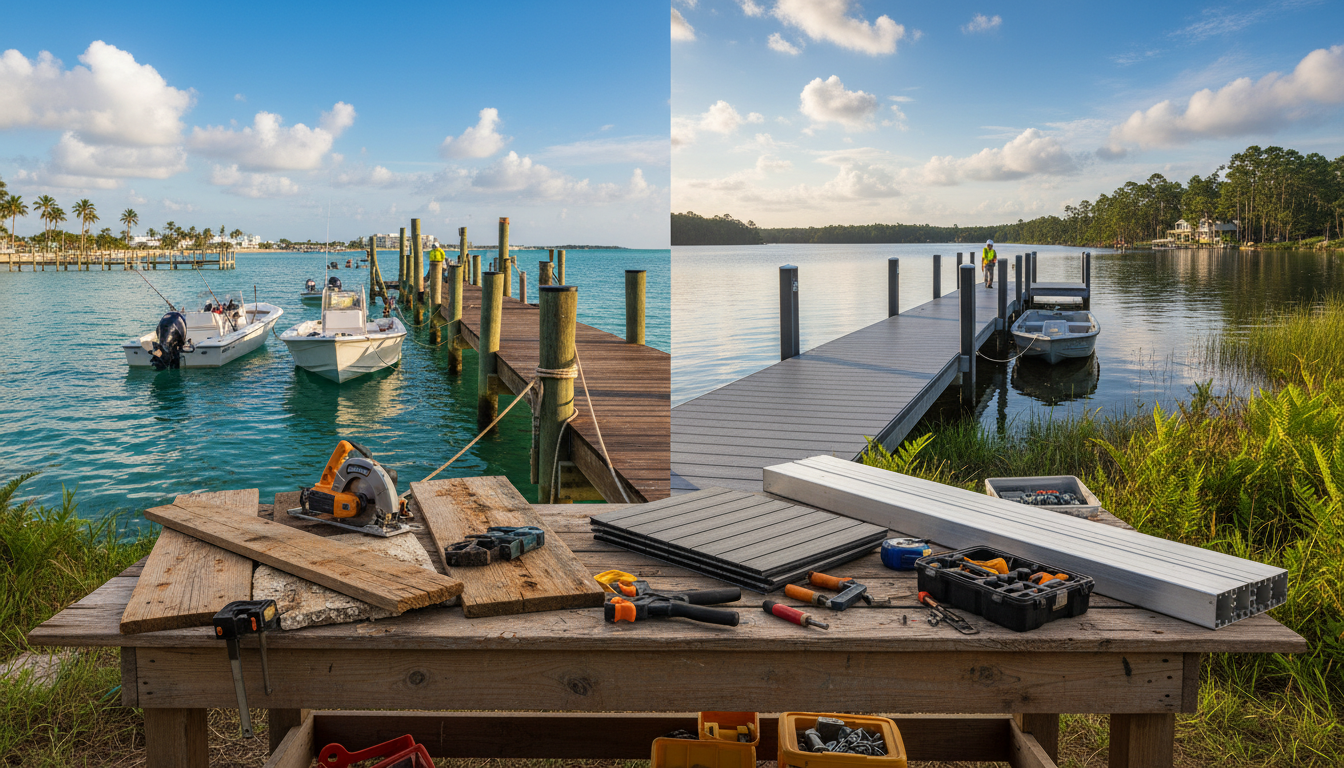
Comparing the Best Materials for Dock Construction in Jacksonville Saltwater vs Freshwater
Start by matching each option to how often your dock gets wet, how much boat traffic it sees, and how salty the air is.
Pressure-treated wood is cost-effective and familiar, but it needs regular maintenance and inspections. You’ll repaint, seal, or replace boards more often near salt spray.
Aluminum and concrete deliver superior durability and corrosion resistance. Aluminum framing resists rust, and concrete holds up well under heavy boat traffic and changing levels.
Composite decking blends a clean look with lower maintenance than traditional wood. Many owners pair aluminum framing with composite decking to balance strength and appearance.
- Durability trade-offs: concrete vs. wood appearance and upkeep.
- Corrosion resistance is critical in salty water; aluminum excels here.
- Proper piling and installation matter as much as surface choice.
- Hybrid options often extend service life while keeping your waterfront attractive.
Why Traditional Wood Often Fails in Marine Environments
Wood looks inviting, but near water it often starts a slow decline you can’t ignore. Porous fibers soak up moisture, which leads to warping, cupping, and cracking over time.
The Cycle of Rot and Splintering
When wood soaks, then dries repeatedly, the surface breaks down. That movement creates splinters and uneven boards that are unsafe to walk on barefoot.
Organic fibers also feed mold and mildew. That means more frequent maintenance and costly repairs just to keep your structures safe.
Even pressure-treated planks lose their edge. Chemicals slow decay but can’t stop the natural shifting that causes damage to pilings and decking over time.
If you value long-term safety and appearance, plan for alternatives or expect to spend time sanding, sealing, and replacing boards as the seasons wear them down.
Benefits of Advanced PVC and Composite Decking
Modern PVC and composite decking deliver real advantages at the water’s edge. You get long-term protection against decay plus a more comfortable surface to use year-round.
Moisture Resistance
Advanced PVC is 100% inorganic, so it has no wood fibers or organic fillers. That stops rot and keeps your dock stable even when pilings stay damp.
This material reduces routine upkeep compared to traditional wood. You will spend less time sealing and replacing boards.
Temperature Control
Cool Touch® Technology lowers surface heat on sunny days. That means you can use your decking barefoot without burning your feet.
A cooler surface also preserves finishes and extends the appearance of your waterfront decking.
Slip Resistance
Textured grain patterns improve traction when the surface is wet. That safety benefit is vital for high-traffic docks and marina projects.
Composite decking options combine grip and low maintenance while resisting mold and surface breakdown.
- Less maintenance overall: occasional cleaning is usually enough.
- Longer life and steady appearance with minimal upkeep.
The Role of Aluminum Framing in Structural Integrity
A strong subframe keeps everything above it stable, safe, and low-maintenance. A properly engineered aluminum frame keeps decking flat and loads supported through years of wet-dry cycles.
Aluminum resists corrosion far better than steel in marine environments. It does not rot, warp, or split like wood, so your pilings and decking stay aligned longer.
That means less routine maintenance and fewer surprises during inspections. Proper installation also prevents sag and keeps surfaces safe under heavy loads.
- Aluminum gives lasting strength without the corrosion risk of steel.
- The inorganic frame avoids rot problems common with wood substructures.
- Use it to support premium decking and extend the life of your docks.
| Subframe | Corrosion | Rot/Dimensional | Maintenance |
|---|---|---|---|
| Aluminum | Low | None | Minimal |
| Steel | High without coatings | None (but rust weakens) | High |
| Wood | Moderate (fastens corrode) | Prone to rot and warp | Frequent |
“Choose an aluminum frame and you build a foundation that protects your waterfront investment for years.”
Concrete Solutions for High-Traffic Commercial Docks
High-traffic marinas demand a backbone that resists pounding waves and constant loading.
Concrete performs exceptionally well in harsh marine conditions. It offers long-term strength and far less upkeep than wood when you run a busy marina or commercial pier.
Concrete pilings create a permanent base that resists damage from wave action and heavy traffic. That stability lowers routine maintenance and the need for frequent repairs.
Unlike steel, concrete does not rust, and unlike wood it won’t rot. Use concrete for main structural elements to limit future upkeep and protect your investment.
- Durability: Handles heavy loads and constant use with minimal repairs.
- Lower maintenance: Better long-term option where traffic is steady.
- Pilings: Provide stable support against waves and shifting water levels.
| Element | Typical Performance | Upkeep |
|---|---|---|
| Concrete deck | High strength; resists surface damage from traffic | Low; occasional sealing and inspections |
| Concrete pilings | Long-term stability in varying water conditions | Minimal; rare structural repairs |
| Concrete vs. alternatives | No corrosion like steel; no rot like wood | Lower lifecycle repairs and downtime |
“Choose concrete for commercial sites when strength and low upkeep are top priorities.”
Safety Considerations for Your Waterfront Surface
Good lighting and clear edge markers are simple upgrades that cut accidents and help you use your waterfront after dark.
Start with visibility. Riser lights on stairs and post-cap lights define edges after sunset. They make it easier to find steps and walkways coming off the boat or when guests arrive late.
Use contrasting colors on stair treads and the picture-frame edge to highlight elevation changes. That simple visual cue lowers trip risk and helps everyone see small changes in the surface.
Practical safety upgrades
- Install adequate lighting so your dock is safe to use after dark and to guide guests back to your property.
- Choose a sturdy railing system—aluminum railings resist corrosion and offer reliable protection against falls.
- Proper installation of slip-resistant composite decking improves grip when the surface is wet from boat use.
- Inspect pilings and the surface regularly to spot any steel fasteners that have corroded and could weaken the structure.
Final tip: by focusing on lighting, clear edges, and regular checks you add real protection to your dock and keep your waterfront a secure place for family time and evening boat returns.
Conclusion
Investing in durable options upfront means more time enjoying the water, not fixing upkeep. Choose what stands up to salty air and wet-dry cycles, and you protect your shoreline now and later.
Wood still has charm, but modern materials such as PVC and aluminum cut routine maintenance and hold their look longer. Select decking that resists mold and slips to keep families safe.
If you run busy marinas, consider concrete where strength matters most. For private piers, pair sturdy frames with low-upkeep decking to extend service life and reduce surprises in inspections.
Prioritize quality during construction and you’ll spend weekends on the water, not repairing docks. Make choices that protect your waterfront and add real life back to your free time.
FAQ
How do salt spray and high humidity affect your waterfront structure?
Salt spray speeds up corrosion on metal fasteners and steel pilings, and it draws moisture into wood, causing swelling and rot. High humidity keeps surfaces damp longer, which accelerates mold and decay. Choose corrosion-resistant profiles and finishes, and plan regular rinsing and inspections to reduce damage.
What should you know about fluctuating water levels and tides?
Changing water levels put extra stress on pilings, cleats, and gangways. You need flexible connections, durable piling caps, and materials that tolerate repeated wet-dry cycles. Designing with appropriate freeboard and adjustable gangways helps prevent structural strain.
Why does untreated wood often fail on coastal projects?
Untreated lumber absorbs salt and moisture, encouraging rot, insect attack, and splintering. Fasteners corrode and loosen over time, making the surface unsafe. Pressure-treated timber or marine-grade species extend life, but expect higher upkeep than alternatives like composite or PVC decking.
How does composite decking resist moisture and wear?
Composite boards from brands like Trex or TimberTech blend wood fibers with plastic for low absorption and high dimensional stability. They resist splintering and require less sealing or staining. Still, choose marine-rated products and ventilated framing to prevent trapped moisture.
Is PVC decking a good option for temperature and slip control?
PVC planks stay cool underfoot compared with darker materials and shed water quickly. Many have textured surfaces to improve traction when wet. Look for UV-stable formulations to avoid fading and specify slip-resistant profiles if you expect heavy foot traffic or boat loading.
What role does aluminum framing play in durability?
Aluminum substructures resist rust and deliver high strength-to-weight ratios, so they handle tidal forces and storm surge with less maintenance. They pair well with composite or PVC decking. Use marine-grade aluminum and corrosion-resistant fasteners to maximize life span.
When is concrete the right choice for a dock surface?
Cast-in-place or precast concrete fits high-traffic commercial piers and marinas where heavy loads and constant use occur. Proper mix design, reinforcement, and coatings protect against chloride attack. Expect higher initial cost but long service life and low daily upkeep.
How do you protect steel components from corrosion in salt environments?
Use galvanized or stainless steel (304 or 316) depending on exposure. Hot-dip galvanizing and epoxy or polymer coatings add barriers. Regular inspections and spot repairs of damaged coatings are critical to prevent rapid deterioration.
What safety features should you include on your waterfront surface?
Install non-slip decking, visible edge markings, and adequate guardrails where needed. Add LED lighting for night visibility and reflective strips near mooring points. Ensure electrical components meet marine-grade standards and have GFCI protection.
How often will your dock need maintenance or repairs?
Frequency depends on material and exposure. Composite and PVC often need annual cleaning and minor checks. Aluminum framing requires inspection every 1–3 years. Wood and steel may need more frequent sealing, fastener replacement, or corrosion treatment. Create a seasonal checklist to catch issues early.
Can you mix different surface and structural options?
Yes. A common approach pairs aluminum or concrete substructures with composite or PVC decking. That combo balances strength, corrosion resistance, and low upkeep. Just confirm compatibility of fasteners and load ratings with your contractor.
What environmental rules should you consider for shoreline work?
Local permits, wetlands regulations, and water quality protections govern shoreline projects. Jacksonville area authorities may require specific materials, pile installation methods, or turbidity controls. Consult a marine contractor and permitting office before you start.
How does boat traffic and weather influence which surface you choose?
Heavy boat use and rough weather demand tougher surfaces and stronger anchoring. Choose impact-resistant decking, reinforced pilings, and breakaway features that limit damage during storms. Plan for higher durability where wakes and wind are strong.