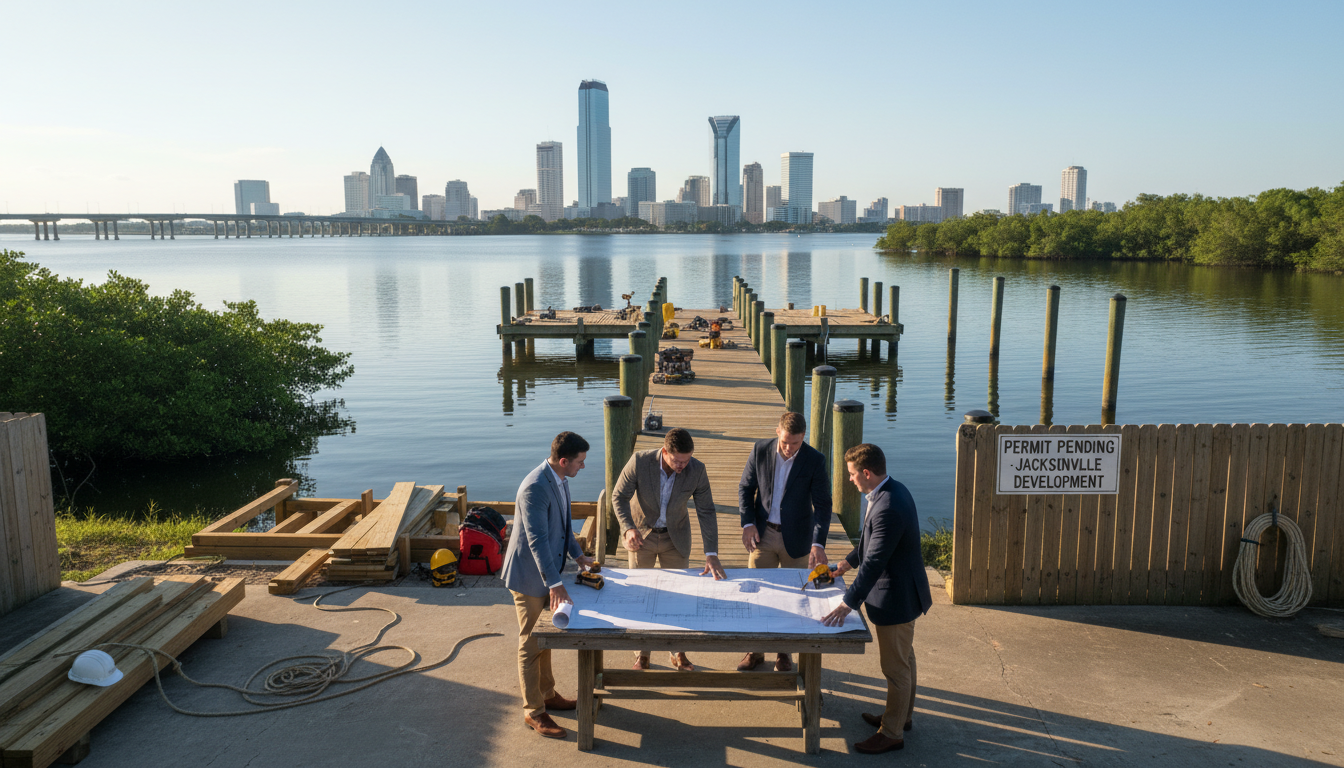
Can a simple dock project spark a cascade of rules or can it be smoother than expected? Florida’s coastline spans 1,197 statute miles, and that length brings strict regulation. Planning for waterfront upgrades means learning how local rules affect your plans.
Many owners favor floating docks or traditional piers to keep a boat safe. Before any construction starts, check whether your land allows these structures and which permit forms the state requires. The process can sound complex, but clear steps make it manageable.
Key Takeaways
- Florida’s long coastline is heavily regulated; research local rules early.
- Verify whether your waterfront property allows floating docks or piers.
- Confirm which permit applies before any building begins.
- Following state guidelines keeps boats secure and avoids fines.
- Learn the permit process so the project moves smoothly.
Understanding Why You Need a Permit to Build a Dock in Jacksonville FL
Simple waterfront upgrades can have wide effects on habitat, public access, and safety. Permits exist to keep a balance between improving waterfront property and preserving local ecosystems.
Environmental protection agencies review proposals so nearby plants, fish, and water quality remain healthy. When a structure touches public water, state regulations step in to manage safe access and shoreline use.
Many homeowners prefer floating docks for convenience. Even floating options must meet rules to prevent erosion, disturbing marine life, or blocking public access.
- Permits guard aquatic habitats and long-term value of waterfront property.
- Regulations ensure boats and docks share the water safely.
- Following the proper process avoids fines and keeps projects legal.
Determining if Your Project Requires Official Authorization
Not every pier or platform needs formal review — size and use often decide. Small, private structures that cover no more than 500 square feet of water may qualify for an exemption. That exception usually applies only for non‑commercial use.
Exemptions for Small Structures
If the planned structure stays under 500 square feet over the waters and is for private use, local regulations often allow it without a formal permit. Still, confirm zoning rules and any neighborhood restrictions before starting work.
When Permanent Permits are Mandatory
Permanent construction or docks that exceed 500 square feet usually require a formal dock permit. General dock permits can cover up to 2,000 square feet of over‑water surface, but those projects undergo an environmental impact review.
- Check zoning and state regulations for your location.
- Expect review when construction affects public access, boat traffic, or habitat.
- Floating docks may have different rules than fixed structures in certain areas.
Before any building begins, contact local authorities so the process goes smoothly and the waterfront stays protected.
Navigating the Permitting Process with Local and Federal Agencies
Securing the right approvals means coordinating several agencies before any construction starts. Start early and gather site plans, photos, and any zoning notes for your location.
Coordinate with state and federal offices. Submit application documents through the Department of Environmental Protection and reach out to the Army Corps for waterways review. Both groups assess environmental impact and public access.
Working with Professional Installers
Hiring experienced installers shortens the timeline. Firms like EZ Dock know how the Army Corps engineers work. They prepare complete plans, which lowers delays during the dock permit review.
- Combine DEP and Army Corps reviews early to meet federal and state requirements.
- Professionals ensure compliance with zoning and local regulations for floating docks or fixed structures.
- Complete plans speed approvals and avoid repeat submissions.
| Step | Who Reviews | Outcome |
|---|---|---|
| Submit plans | Department of Environmental Protection | State approvals, checklist of requirements |
| Federal review | U.S. Army Corps of Engineers | Corps engineers evaluate waterways and access |
| Installer review | Professional installer | Construction-ready plans and compliance sign-off |
Environmental Considerations for Waterfront Construction
Waterfront projects must balance recreation with protection of fragile habitats. Before any work, consult the department environmental protection for rules that guard water quality and local ecosystems.
Protecting Water Quality
Protecting water quality is a primary goal. The department environmental protection limits shading that can harm aquatic plants. Choose materials that do not leach toxins, especially for floating docks and fixed piers.
Managing Submerged Lands
Submerged land rules limit how far structures may extend. Docks can’t cover more than 20% of a waterbody’s width or extend beyond 500 feet waterward of MHW. Access walkways must sit at least 5 feet above mean high water and be no more than 4 feet wide.
Minimizing Ecosystem Impact
Follow state regulations so natural flow, fish habitat, and shoreline vegetation remain healthy. Proper placement prevents blocked currents and protects waterways. Early consultation helps with permit compliance and keeps the waterfront property valuable.
Factors That Influence Your Dock Design and Budget
Costs and site limits shape every waterfront design choice before a single beam goes in.
Materials matter. Wood often costs less up front but needs frequent treatment and repairs. Aluminum costs more initially but lowers upkeep over time and boosts long-term quality.
Location dictates type and anchors. Shallow water, strong currents, or soft land may require specialized anchoring or deeper pilings. That raises both time and construction expenses.
Size and intended use set capacity needs. Match weight limits to your boat, kayak, or leisure plans and confirm local regulations about over‑water footprint and pathways.
- Floating docks often save on installation and maintenance.
- Check material restrictions in your area; they affect budget and lifespan.
- Plan for future upgrades so initial choices don’t force costly replacements.
Conclusion
Securing approvals early keeps waterfront projects on schedule and within the law. Start the permitting process with clear plans and site details so reviews move faster and approvals arrive without surprise.
Obtaining permits is essential for any dock project. Whether choosing floating docks or fixed structures, expect an environmental impact review that follows state regulations. Work with experienced installers to match design with local rules.
Getting a dock permit early avoids costly delays and helps protect waterways. With the right review and professional support, the process stays smooth and your new docks last for years.
FAQ
What approvals apply when you plan a dock on waterfront property?
Local, state, and federal reviews often apply. The City of Jacksonville and Duval County look at zoning, setbacks, and shoreline access. The Florida Department of Environmental Protection evaluates water quality and submerged lands. The U.S. Army Corps of Engineers reviews impacts to navigable waters. Your project may need multiple authorizations before any work starts.
How do you know if your waterfront project qualifies for an exemption for small structures?
Exemptions depend on size, location, and design. Very small floating platforms under local square-foot thresholds and removable structures sometimes skip full review. Still, you must confirm with the city and state. Even exempt items may require registration, best-management practices, or notification to the Corps of Engineers.
Which situations trigger mandatory, long-term approvals?
Fixed piers, piling-driven docks, seawalls, or projects extending into navigation channels generally need formal permits. Permanent structures that alter the shoreline or submerged lands will likely require state and federal permits plus local zoning clearance. Projects affecting wetlands, mangroves, or endangered species get stricter scrutiny.
What steps are involved when working with the Army Corps of Engineers and state agencies?
Start with a site plan, photos, and dimensions. Submit applications to the Corps and the Florida Department of Environmental Protection or the local environmental office. Expect public notices, environmental reviews, and coordination with resource agencies. Timing varies; simple projects may clear in weeks, complex ones take months.
Should you hire a professional installer or marine contractor for your dock project?
Yes. Licensed marine contractors know local rules, survey needs, piling techniques, and erosion controls. They help avoid mistakes that trigger costly remediation or permit denials. A good contractor also handles permit paperwork, engineering, and compliance during construction.
How do water quality rules affect dock construction?
You must prevent turbidity, pollution, and runoff during work. Agencies require silt curtains, containment, and proper disposal of construction debris. Fuel, paint, and chemical controls are enforced to protect fisheries and recreation areas. Follow best-management practices to meet state water-quality standards.
What rules govern use of submerged lands and riparian rights?
Florida controls submerged lands seaward of the mean high water line; upland owners often hold riparian rights but not absolute ownership of the seabed. Building seaward typically requires a lease or consent from the state and compliance with submerged-land statutes. Check title records and agency guidance before planning.
How can you minimize harm to local ecosystems during construction?
Use elevated, open-grate decking to allow light, minimize piling footprint, avoid in-water work during sensitive seasons, and protect nearby seagrass and mangroves. Employ erosion controls and restore disturbed shorelines with native plants. Early consultation with environmental specialists helps reduce impacts.
What design and budget factors influence final costs and approvals?
Materials (floating versus fixed), length, width, number of pilings, boat lifts, and utilities affect cost and permitting complexity. Site conditions — depth, currents, and substrate — change foundation needs. Coastal resilience requirements and mitigation needs can increase expenses. Get an early estimate and a permit-fee schedule from agencies.
How long does the whole review and approval process usually take?
Timelines vary widely. Simple, minor projects might clear in 30–90 days. Larger docks, shoreline stabilization, or projects requiring public notice can take several months to a year. Delays often stem from incomplete applications, environmental concerns, or required mitigation plans.
What penalties apply for constructing without proper authorizations?
Enforcement can include stop-work orders, fines, required removal of illegal structures, and restoration costs. Federal violations may trigger higher penalties and criminal referral in severe cases. It’s cheaper and safer to verify all approvals before starting construction.