Have you ever wondered whether you should fix your waterfront structure or start fresh with a new build?
You’ll find the numbers vary a lot. A new build often fell between $15,000 and $30,000, while a coastal piling setup with a boat lift could top that depending on location and site needs.
Think about materials and labor early. Aluminum framing lasts near saltwater but starts pricier than wood. Skilled crews usually eat up 30% to 50% of the budget, so hiring the right team matters.
Every project is unique. Water depth, soil type, tidal flow, and the type of piling you choose will shape your final decision and the long-term value of your property.
Key Takeaways
- You should weigh immediate savings against long-term durability.
- Labor often represents a large portion of the total budget.
- Aluminum framing boosts longevity near saltwater.
- Adding a lift or solar lighting increases functionality and value.
- Site conditions and location drive final decisions and pricing.
Understanding Dock Repair vs Replacement Cost Jacksonville Florida
Deciding whether to fix sections of your waterfront platform or start fresh can feel overwhelming.
Minor fixes often make practical sense, especially when problems are localized. In Fernandina Beach, typical small work runs from $250 to $1,500, depending on the size and materials used.
To get a fair price you should contact several contractors for written quotes. Compare pricing, labor timelines, and past projects. Online directories and local reviews help you find reputable teams who handle piling and floating docks.
- Get multiple quotes so you understand market pricing and services offered.
- Schedule routine service — professional boat dock repair extends lifespan and protects your boats.
- Check reviews to confirm a contractor’s track record with similar types of structures.
“A well-maintained boat dock adds real value to your property and avoids bigger, more expensive problems down the day.”
Key Factors Influencing Your Project Budget
A clear budget starts when you break a waterfront project into labor, piling, and accessory costs.
Labor and Contractor Fees
Skilled marine contractors typically charged between $75 and $125 per hour. Labor usually made up 30% to 50% of the total project price.
That meant choosing experienced crews could drive up the initial price but cut future repair needs.
Foundation and Piling Costs
Basic wood or concrete pilings ranged from $300 to $700 each. Deep or drilled installations sometimes exceeded $5,000 per piling.
Location, soil and water depth determined the type and number of supports you needed.
Utility and Accessory Add-ons
Electrical wiring added roughly $500 to $2,000 and water lines another $300 to $800. Adding a lift or lighting required extra wiring and planning.
“Request detailed data from your contractor so you understand how much of the price per square foot goes to materials and labor.”
| Item | Typical Price Range | Notes |
|---|---|---|
| Labor (hourly) | $75 – $125 / hr | 30%–50% of total project |
| Basic pilings | $300 – $700 each | Depends on size and soil |
| Deep piling (drilled) | $5,000+ | Used in difficult substrate |
| Electrical & water | $800 – $2,800 | Includes lighting and outlets |
| 30–40 ft project average | $18,000 – $22,000 | ~$20 – $50 per square foot |
When to Choose Repairs Over a Full Rebuild
Deciding whether to patch worn boards or invest in a full rebuild comes down to age, damage, and long-term value.
If your wooden structure is under 10–20 years old and the foundation is sound, targeted repairs usually make sense. The national average for boat dock repairs sits near $3,376, though actual repair costs range from about $889 to $5,929.
Severe foundation damage can push a professional repair up to $3,000. Full replacement typically runs between $7,250 and $26,000, so weigh how much you’ve already spent and how many good years remain.
- Age: If the structure is 10–20 years old, compare ongoing repairs to the price of a new build.
- Money spent: Many homeowners save by spending average repair amounts while the foundation holds.
- Structural issues: If piling or joists fail, hire a contractor — major fixes raise repair cost quickly.
- Storm damage: Hurricane work may be inexpensive for small fixes, but large losses favor replacement.
- Usage: For frequent boat use or heavy lifts, choose the option that gives longer life for your project.
| Scenario | Typical Price Range | When to Choose |
|---|---|---|
| Minor fixes & maintenance | $250 – $1,500 | Age |
| Major structural repair | $889 – $5,929 | Foundation intact; isolated piling work |
| Foundation replacement | Up to $3,000 | Severe piling failure but deck salvageable |
| Full replacement | $7,250 – $26,000 | Widespread rot, multiple failures, or long-term upgrade |
“Don’t try to patch major structural problems yourself — licensed contractors protect you from higher costs and unsafe work.”
Evaluating Material Performance in Saltwater Environments
Salt air and sun change how materials perform over time around your waterfront. Your selection now will affect maintenance, longevity, and future repairs.
Start with framing and fasteners. Aluminum framing resists rot, warping, and UV far better than traditional wood, making it a smart choice for coastal builds.
Benefits of Aluminum and Composite
Aluminum lowers long-term labor and material needs because it won’t rot. Composite decking costs more up front but cuts down on ongoing upkeep and the frequency of dock repair.
Risks of Traditional Wood
Pressure-treated wood is the cheapest option, yet saltwater shortens its lifespan. Low-grade timber often leads to more frequent repairs and higher cumulative costs over the years.
“Use stainless steel fasteners and quality framing to avoid premature failure from corrosion.”
- Concrete provides extreme durability but can reach about $140 per square foot in some cases.
- Stainless fasteners are essential to prevent corrosion in salty air.
- Right material choice reduces repeat dock repair and can lower total price paid over time.
Navigating Florida Permitting and Regulatory Requirements
Before you dig or sign a contract, know the permits and rules that shape every waterfront project. Permit fees typically range from $1,000 to $4,000, and consultant or engineer reviews can add another $1,500 to $3,000 to your budget.
Managing Environmental and HOA Restrictions
Timing matters. County approvals for shoreline work often take six to twelve months, and sites near mangroves or manatee zones require extra surveys and mitigation plans under the Coastal Construction Control Line (CCCL).
If your proposal exceeds 500 square feet, expect an environmental impact review that can lengthen the schedule and raise costs. HOA rules can be stricter than local codes; they may limit length, approved materials, and even lighting brightness.
- Check HOA codes early so you avoid redesigns.
- Hire a pro to manage permits and speed permitting time.
- Document everything to prevent fines and delays.
“Proper permitting protects your property and keeps your boat dock project legal and insurable.”
Comparing Professional Contractor Services to DIY Kits
Choosing between a turnkey professional build and a weekend kit changes how much time and worry you’ll invest.
DIY floating kits range from $3,000 to $10,000 and appeal to homeowners on a tight budget. They are simple for small, protected sites but may age faster in salt air and can run afoul of local codes.
Turnkey professional services add roughly $8,000 to $20,000 for permits, heavy equipment, and full project management. A pro charges about $50 to $100 per hour for complex work, which can save money by avoiding repeated fixes.
“A written quote from several contractors helps you compare real pricing, scope, and material quality.”
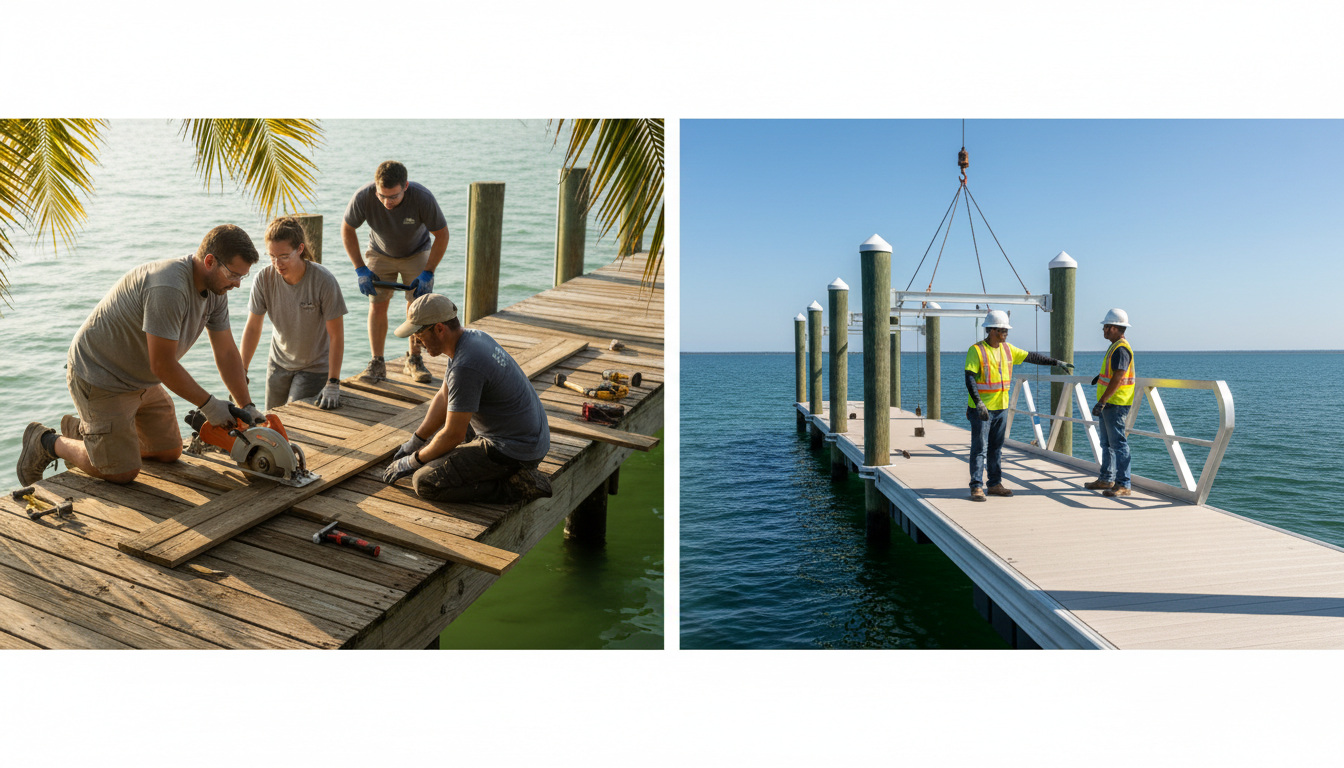
- Pros secure permits, handle piling and lifting gear, and source aluminum or composite materials.
- DIY may save money now but can create code issues and faster degradation in saltwater.
- Compare written quotes and reviews to judge value, labor, and warranty coverage.
| Option | Typical Price Range | Key Advantage |
|---|---|---|
| DIY floating kit | $3,000 – $10,000 | Lower upfront price; good for small, private use |
| Professional turnkey | $8,000 – $20,000 (added) | Permits, heavy equipment, full management |
| Professional hourly (specialist) | $50 – $100 / hr | Best for structural and foundation work |
Long Term Maintenance Strategies for Waterfront Structures
A short maintenance plan prevents big surprises and keeps boats ready when you need them.
Annual inspections cost as little as $50 to $100. A quick check flags cracked boards, loose fasteners, and early piling issues before they grow into major problems.
Pressure washing removes algae and biofilm. Budget about $210 to $450 for a full clean. This simple step preserves surface materials and improves safety for people and boats.
Sealing wood regularly stops rot. Typical sealing runs $150 to $600 for a standard platform. Use stainless fasteners and consider aluminum ladders to reduce future wear.
- Use modular bumpers so you replace only the damaged piece, saving money over whole-section swaps.
- Collect inspection data each year to spot piling or foundation changes early.
- Keep debris cleared and lighting functional to protect value and access to your property.
“Consistent maintenance is the best way to protect your investment and avoid large, unexpected work.”
| Maintenance Task | Typical Price Range | Why it Matters |
|---|---|---|
| Annual inspection | $50 – $100 | Early issue detection, preserves warranty |
| Pressure washing | $210 – $450 | Removes algae, prevents slips and surface decay |
| Sealing & treatment | $150 – $600 | Protects wood from rot and sun damage |
Conclusion
A clear look at age, damage, and future plans helps you choose the best path for your waterfront platform.
Minor fixes often extend life cheaply, but when supports fail you may need a full rebuild. Talk to a licensed contractor who knows saltwater conditions and permitting rules.
Prioritize high-quality materials like aluminum or composite to cut long‑term maintenance. Get detailed quotes from multiple contractors so you compare scope, timeline, and projected costs.
Stay proactive with routine inspections and simple upkeep. That approach protects your boat access, keeps value in your property, and gives you confidence in your final decision.
FAQ
How do I know if a repair or a full rebuild makes more sense for my waterfront structure?
Inspect the frame, pilings, decking, and hardware. If damage is limited to surface boards or fasteners, you can usually fix those elements and save money. If multiple pilings are rotten, the frame is warped, or the structure lists, a full replacement often protects your investment long term. Get a professional assessment and at least two quotes before you decide.
What typical price range should I expect for small repairs versus replacement of a medium-sized platform?
Minor fixes like replacing boards, hardware, or some piling sleeves often run a few hundred to a few thousand dollars. A medium rebuild using durable materials like aluminum or composite can range from several thousand to tens of thousands, depending on size, access, and local labor rates. Ask contractors for line-item estimates so you can compare scopes and materials.
How much does size and boat access affect what you’ll pay?
Bigger structures require more materials and longer labor time, so square footage has a direct impact. If a vessel needs staging or you need a lift, that adds equipment and time. Limited access or tight yards may require specialized gear or barges, which increases prices. Plan for access costs when you budget.
Which materials hold up best in saltwater and reduce long-term expenses?
Aluminum and composite decking resist corrosion and rot, lowering maintenance and extending service life. Pressure-treated or tropical hardwoods look good but need more upkeep and may cost more over a decade. Your choice will influence both upfront expense and future upkeep.
Are there permits or environmental rules I must follow in Northeast Florida?
Yes. You’ll likely need county and state permits for construction on tidal waters, plus environmental protections for seagrass and wetlands. Local building codes and homeowners association rules can add requirements. Start permit research early to avoid delays and extra fees.
Can I save money by doing parts of the work myself?
You can tackle cosmetic tasks like painting or replacing boards if you have carpentry skills and the right safety gear. Structural work, piling replacement, and electrical or plumbing for lifts should go to licensed pros. DIY can reduce labor costs but don’t risk code violations or unsafe outcomes.
How do contractors typically charge—by square foot, by hour, or by project?
Many pros provide a flat project price based on size and materials. Some charge by the hour for smaller jobs or unforeseen repairs. Per-square-foot pricing is common for decking but often excludes piling and foundation work. Request detailed bids to understand what’s included.
What routine maintenance keeps your waterfront structure lasting longer?
Regular inspections, cleaning, fastener checks, and timely replacement of damaged boards will slow deterioration. Rinse off salt, lubricate moving parts, and touch up protective finishes. Scheduled inspections before storm season are smart for coastal properties.
How much does adding lighting, power, or a boat lift change the budget?
Electrical work and lift installation can add thousands, depending on complexity and code requirements. Lighting is relatively low cost if power is already at the site; running conduit or upgrading service raises the price. Include these items early in estimates so contractors account for wiring and permits.
What should I look for when vetting local contractors and quotes?
Verify licenses, insurance, references, and recent photos of similar projects. Ask about warranties and who handles permits. Compare scopes carefully—cheapest bid isn’t always best. Check online reviews, Better Business Bureau ratings, and local references to confirm reliability.
Does replacing pilings extend a structure’s lifespan, and what are the piling options?
Yes. New pilings stabilize the foundation and can add decades of service. Options include treated timber, concrete, and steel or composite piles. Material choice affects durability, permitting, and price—saltwater exposure often favors non-wood options for longevity.
How do seasonal conditions in Northeast Florida affect project timing and pricing?
Hurricane season and high tides can constrain schedules and require sturdier construction, which may increase costs. Winter and spring typically offer better windows for work. Contractors’ availability also affects price—busy seasons can push lead times and labor rates up.