Curious what a new waterfront can mean for your property—and your wallet? The average homeowner spends about $14,835 for a typical installation, though totals can range from $750 to $65,000 depending on your project scale and site conditions.
Centering a boat dock on your budget means weighing water depth, materials, and access. Labor often claims roughly half of the total, so planning for skilled construction and ongoing maintenance will protect that investment.
Consider size, material choices, and whether you want a simple slip or a full platform. A clear per square foot estimate helps you compare options and keep your budget on track while giving you a durable waterfront feature for years.
Key Takeaways
- Average cost centers near $14,835, with wide variation by project.
- Labor often makes up about half of total expenses.
- Water depth, materials, and site access drive final pricing.
- Use per square foot estimates to manage budget and size decisions.
- Professional installation and routine maintenance extend dock life.
Understanding How Much Does It Cost to Build a Dock in Jacksonville Florida Per Foot
Start by estimating square footage — that number drives nearly all pricing for waterfront work.
To get a clear project estimate, measure the walkway, pierhead, and any floating areas. The total square foot figure lets you compare pricing and materials quickly.
Average Price Ranges
Floating docks typically run from $15 to $35 per square foot, which includes materials and labor. They suit changing water levels and often cost less upfront.
Piling docks cost more. Expect $20 to $40 per square foot for a permanent foundation, depending on site conditions and material quality.
Calculating Square Footage
- Measure all decking and platforms; multiply length by width for each section.
- Remember that decking type will shift final pricing significantly.
- Plan for labor as roughly 50% of total costs because marine work needs specialists and equipment.
“Accurate dimensions are the primary factor in determining your final project estimate.”
| Dock Type | Price Range (per sq ft) | Best For |
|---|---|---|
| Floating | $15–$35 | Variable water levels, lower initial cost |
| Piling | $20–$40 | Permanent foundation, higher durability |
| Key Budget Items | NA | Decking, labor (~50%), site prep |
Primary Factors Influencing Your Total Project Budget
Several site details will determine the final waterfront price more than your decking choice. Start by checking water depth and bottom conditions, since these dictate piling length and foundation type.
Site access matters. Remote areas or tight yards raise mobilization fees for barges and pile drivers. That adds to your installation bill quickly.
Labor and specialist fees are a big slice of the budget. Marine contractors typically charge between $40 and $110 per hour. Structural engineers, when needed for complex design and safety, bill $70–$250 per hour.
- Water depth and bottom conditions: control piling needs and time on site.
- Material selection: pressure‑treated wood lowers initial costs versus composite options.
- Site accessibility and mobilization: can add significant fees for heavy equipment.
- Permits and fees: usually range from $500 to $3,000 depending on local rules.
“Accurate site evaluation is the fastest way to avoid surprise costs during construction.”
Plan your budget around these points and you’ll get clearer dock cost estimates per square foot and a more predictable project outcome.
Comparing Popular Boat Dock Styles
Different dock styles bring unique benefits that match specific water and site conditions. Choosing the right option affects access, life span, and your overall budget.
Floating Docks
Best for changing water levels. Floating docks rise and fall with tides, giving easy boat access in variable water.
They often offer lower initial price and simpler installation, with lighter equipment needs.
Piling Docks
Gold standard for stability. Piling docks are driven deep into the bed. They handle choppy water and larger boats well.
Expect higher labor and installation demands, plus stronger decking and aluminum or wood piles.
Crib and Suspension Docks
Crib docks are permanent islands filled with rock and timber. Typical costs range from $10,000 to $50,000 for a full crib structure.
Suspension docks offer high aesthetic value and suit sensitive areas. They are complex and usually require a local engineer for design and permits.
- Consider boat lifts for convenience; prices vary with size and model.
- Check local rules on width, length, and material before finalizing design.
“Match dock type to water conditions and planned equipment for the best long-term value.”
Selecting the Right Materials for Coastal Conditions
Choosing the right material will shape long-term durability and future upkeep for any waterfront project.
Salt, sun, and wear demand careful choices. Marine environments speed rot, fade finishes, and corrode metals, so pick options rated for coastal use.
Comparing Wood and Composite Options
Cedar is the economical pick. It can start near $4 per square foot. Expect yearly sealing to preserve looks and strength.
Composite decking runs $30–$40 per square foot. It resists rot and needs less upkeep than wood, lowering long-term maintenance costs.
Marine‑grade pressure‑treated wood is essential for coastal builds. Contractors recommend .60 pcf or higher for structural pieces to avoid premature failure.
“Choose materials based on exposure and your planned maintenance budget.”
| Material | Typical Price | Best For |
|---|---|---|
| Cedar | $4 / square foot | Low upfront cost; needs sealing |
| Composite | $30–$40 / square foot | Low maintenance; long lifespan |
| Marine PT Wood / Aluminum | Varies | Structural strength; choose saltwater‑grade aluminum |
Essential Add-ons and Custom Features
Small custom features often deliver the biggest return on usability for your pier. You can choose options that protect your boat, improve safety, and boost evening ambiance.
Start with basic protections: dock bumpers run about $50–$100 each and guard your hull from rough pilings and barnacles.
For swimmers and guests, a ladder is wise. Expect $100–$600 depending on material and finish.
“Well-chosen accessories keep your vessel safe and make the waterfront more usable year-round.”
- Boat lifts: $1,000–$15,000 — protect hulls and reduce maintenance.
- Mooring whips: $300–$500 each — keep boats off the dock in wakes.
- Lighting: solar piling caps or wired LEDs for safety and ambiance.
- Boathouse: $10,000–$50,000 — full shelter and storage for gear.
| Feature | Typical Price Range | Primary Benefit |
|---|---|---|
| Boat lift | $1,000–$15,000 | Protects hull; eases launching |
| Dock bumpers | $50–$100 each | Prevents hull damage |
| Ladder | $100–$600 | Safe water access |
| Mooring whips | $300–$500 each | Reduces impact from wakes |
| Boathouse | $10,000–$50,000 | Full shelter and storage |
Navigating Local Permitting and Regulatory Requirements
Before any work starts, you’ll need agency approvals and a certified shoreline survey.
Permitting is often the longest part of your building dock plan. Expect about 120 days for approvals while a licensed surveyor maps your property and water depth.
Agencies like the OCRM and the Army Corps review plans to protect marshes and navigation. Many areas limit dock length to one‑quarter of the waterway width.
- Budget $500–$3,000 for permits and surveying before construction begins.
- Check HOA and city rules for rail height, decking material, and width limits.
- Work with an experienced marine contractor to avoid fines and delays.
“Skipping proper permits can lead to significant fines and project setbacks.”
| Requirement | Typical Time | Typical Cost |
|---|---|---|
| Shoreline survey | 2–6 weeks | $300–$1,000 |
| Agency permitting (OCRM/Army Corps) | 90–120 days | $200–$1,500 |
| HOA / local board review | 2–8 weeks | Varies |
The Role of Professional Marine Contractors
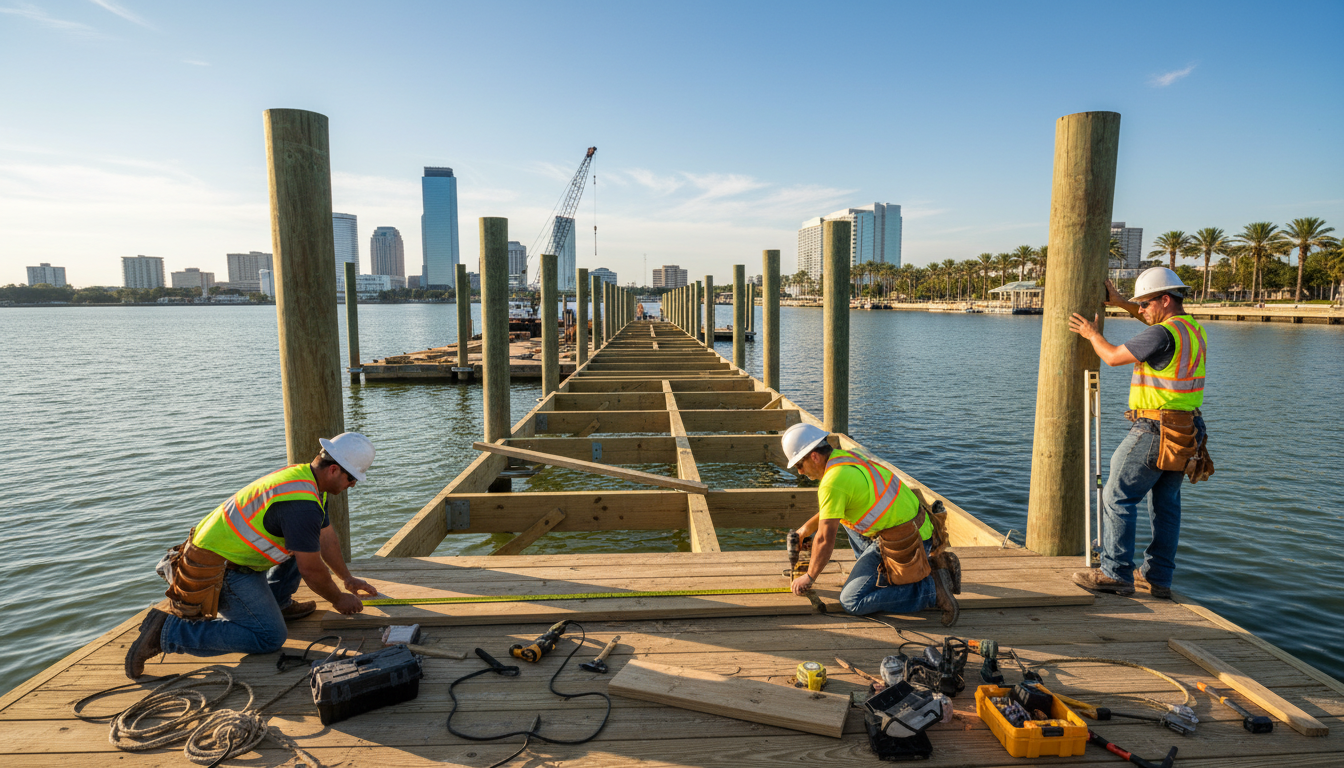
A licensed marine contractor brings training, heavy gear, and practical experience that most homeowners can’t match. These teams supply barges, pile drivers, and other specialized equipment needed for a safe, long‑lasting installation.
Legal and safety matters matter. In many nearby jurisdictions, hiring a licensed pro is mandatory for projects over $5,000. That protects you and ensures the structure meets local codes.
Professionals manage the full project lifecycle: site assessment, permitting support, material selection, construction, and final inspection. That reduces delays and hidden labor costs.
Pick an experienced crew. They avoid common mistakes like wrong fasteners, poor tidal planning, or unsuitable materials for saltwater. Always get at least three quotes and read reviews before hiring.
“Experienced builders understand complex marine conditions and help you choose the best materials for a durable waterfront structure.”
| Service | Why it matters | Typical Benefit |
|---|---|---|
| Specialized equipment | Barges, pile drivers | Safer, quicker installation |
| Licensed oversight | Meets local rules | Reduces legal risk |
| Full project management | From survey to inspection | Fewer surprises and better value |
Long-Term Maintenance and Upkeep Strategies
Simple, steady care prevents small problems from turning into expensive repairs. Follow a seasonal routine and you’ll protect your waterfront investment and keep leisure time hassle free.
Routine Cleaning Practices
Clean at least once a year using a pressure washer or stiff brush to remove algae, grime, and salt buildup. That stops slippery surfaces and slows material decay.
For wood, sand rough spots and apply a marine sealant. For aluminum or composite decking, rinse salt and debris after storms.
Inspecting for Structural Integrity
Check your structure at season start and end. Look for loose boards, rot, and corrosion on fasteners and brackets.
If you find necked‑down pilings or marine borer damage, consider concrete jackets or piling wraps to restore strength.
Budget for repairs: typical fixes average $3,215, so set aside funds so small issues never become full replacements.
“Annual cleaning and timely fixes extend life and save money.”
| Task | Frequency | Estimated Typical Cost |
|---|---|---|
| Pressure wash / brush | Annually | $0–$300 (DIY to pro) |
| Sanding & sealant for wood | Every 1–3 years | $200–$1,000 |
| Piling repair / jacket | As needed | $500–$5,000 |
| Float inspection (floating docks) | Seasonal | $50–$500 |
Impact of Dock Construction on Property Value
Many buyers place extra value on private water access when comparing coastal properties. That preference can change how your home shows in the market.
Investing in quality construction often pays off. Real estate experts estimate a well-built boat dock can raise your property value by 8% to 15%.
A private dock makes waterfront homes stand out. In vacation and boating communities, sellers commonly get premium offers. A clean, durable structure can be as appealing as adding a pool.
Do your homework first. Compare nearby listings and recent sales so your building project aligns with neighborhood norms and price expectations.
“A well-maintained dock is a tangible asset that buyers notice and appraisers count.”
- High-quality materials and permanent foundations typically yield the best ROI.
- Regular upkeep keeps the feature an asset, not a liability at sale time.
| Metric | Typical Uplift | Why it Matters |
|---|---|---|
| Resale value | 8%–15% | Attracts buyers seeking private water access |
| Listing interest | Higher traffic | Docked homes appear in more searches |
| Long-term appeal | Stable | Well-built structures reduce buyer concerns |
Conclusion
Investing in your waterfront, with clear planning, brings lasting enjoyment and stronger resale prospects.
When you scope the project, consider material, permits, and skilled installers for the best outcome. Choose between simple floating docks or a permanent piling structure based on site needs.
Prioritize routine maintenance and safety. That protects your boat, extends life, and preserves property value.
Ultimately, thoughtful choices make the most of your water access and budget. Contact a local marine contractor for a custom quote and take the next step toward your waterfront vision.
FAQ
What range should you expect for building a boat dock along Jacksonville waterfront?
Expect a wide range depending on size, materials and site conditions. Basic floating platforms using pressure-treated wood or polyethylene typically start lower, while aluminum-frame floating docks, pile-driven timber or composite decking push the price up. Factors like water depth, permitting, and boat lifts change totals more than you might think.
How do average price ranges break down by dock type?
Floating systems usually cost less up front and are easier to install. Piling or pile-driven docks require more heavy equipment and marine contractors, increasing labor and material expenses. Crib and suspension options fall between those two depending on materials and complexity. Add-ons such as railings, lighting and lifts will raise the final invoice.
How should you calculate square footage for budgeting?
Multiply dock length by width to get square footage, then factor in finger piers or T-ends. Contractors often quote per square foot or per linear foot for decking; confirm whether the price includes framing, pilings, hardware and installation. Don’t forget to budget contingency for unforeseen site challenges.
What primary factors will influence your total project budget?
Site access, water depth, seabed type, permitting costs, chosen materials, the need for heavy equipment, and local labor rates all matter. Environmental mitigation, hurricane-rated components and marina proximity can add to cost. Plan for maintenance and insurance too.
What are the pros and cons of floating docks versus piling docks?
Floating docks adapt to water level changes and can be less disruptive during install, which helps in soft-bottom areas. Piling docks offer greater longevity and stability in deeper or rougher water but require pile driving and more robust foundations. Your boat size and usage will guide the best choice.
When would crib or suspension docks be a good option?
Crib docks suit shallow, protected waters where you can build up a foundation of rock or timber. Suspension docks may be chosen for long spans or when you want a lighter superstructure. Both depend heavily on local site conditions and permit rules.
How do wood and composite decking compare for coastal exposure?
Pressure-treated wood is affordable and widely used but needs regular maintenance and replacement of damaged boards. Composite decking resists rot and marine borers, requires less upkeep, and often comes with warranties—but costs more up front. Aluminum decking is durable and low maintenance but carries a premium price.
What essential add-ons should you consider for functionality and safety?
Think about boat lifts, guide piles, cleats, bumpers, LED deck lighting, handrails and non-slip surfaces. These features improve safety and protect your vessel, but each adds to material and installation costs. Discuss options with your contractor based on your boating habits.
What permitting and regulatory steps must you navigate locally?
You’ll typically need city and county permits, possibly Army Corps of Engineers or Florida Department of Environmental Protection approvals depending on location and scope. Setbacks, wetland rules and HOA or waterfront community restrictions can affect design and timeline. Start permit talks early to avoid delays.
Why should you hire a professional marine contractor?
Certified marine contractors bring experience with local codes, tidal conditions and the right equipment. They can optimize foundation design, source marine-grade materials, pull permits, and coordinate inspections. Proper installation reduces long-term repair costs and safety risks.
What routine maintenance will keep your structure in good shape?
Regular cleaning, checking fasteners, inspecting flotation units or piling integrity, and replacing worn fenders will extend service life. After storms, inspect connections and deck boards. Schedule professional inspections every few years, especially for piling and structural components.
How do you inspect for structural integrity over time?
Look for rot, rusted hardware, loose fasteners, settling, or movement in pilings. Dive or wade inspections of underwater elements help spot marine borer damage or scour. Keep records of repairs and photos to track changes and support warranty claims.
What impact can dock construction have on waterfront property value?
A well-built, code-compliant dock with boat access and features like lifts or quality decking can raise waterfront appeal and resale value. Overbuilt or poorly maintained structures can be a liability. Match your investment to neighborhood standards and property value to maximize return.
How should you set a realistic budget for the entire project?
Start by defining size, material preferences and desired features. Get multiple bids from licensed marine contractors, include permit and design fees, and add a contingency of 10–20% for site surprises. Compare expected maintenance costs and lifecycle value before finalizing choices.
Which local resources can help you plan and permit your waterfront project?
Contact the City of Jacksonville building department, Duval County environmental services, and the Florida Department of Environmental Protection for guidance. Local marina operators, builders like Taylor Marine or Sewell’s Marina, and marine supply stores can provide practical input and referrals.
What are common mistakes homeowners make when planning dock projects?
Underestimating site prep, skipping permits, choosing the cheapest materials without considering longevity, and not planning for boat size or future needs are frequent errors. Work with experienced contractors and get everything documented in writing.