Curious whether your waterfront plans will be ready by summer? Most residential projects in the area move from planning to use in about three to six months. That range depends heavily on site conditions and local permitting, so your timeline can shift.
The construction process is a clear sequence: initial site review, design and permits, then installation and final inspection. Professional contractors guide each step and help keep the work safe and on track.
Knowing the common hurdles — wetland rules, permit waits, and access limits — helps you set realistic expectations. With good planning, your building dock project becomes smoother and less stressful.
Key Takeaways
- Expect roughly 3–6 months for a typical residential dock project.
- Permitting and site conditions often control the overall timeline.
- Construction follows a step-by-step process from assessment to inspection.
- Hiring pros speeds installation and protects quality and safety.
- Plan ahead to avoid delays tied to environmental or code reviews.
Understanding the Timeline for Your Waterfront Project
A realistic timeline begins by separating design, permits, and installation into distinct phases. That clarity helps you budget and set expectations for your waterfront investment.
Think long term. A dock serves as a platform for boating, fishing, and family time. Treat it like any major property purchase: the initial outlay affects future maintenance and resale value.
The construction process moves through site evaluation, design, permitting, and final installation of materials. Each step can add days or weeks, depending on water depth, access, and local regulations.
Proper maintenance protects that investment. Regular inspections and seasonal care reduce repair costs and keep your structure in compliance with rules.
| Phase | Typical Time | Key Considerations | Owner Action |
|---|---|---|---|
| Site Evaluation | 1–3 weeks | Soil, water, access | Provide property details |
| Design & Permits | 4–12 weeks | Regulations, material choice | Approve plans, budget |
| Installation & Maintenance Setup | 2–8 weeks | Piling, decking, safety | Schedule contractor, plan upkeep |
How Long Does It Take to Build a Dock in Jacksonville From Start to Finish
Mapping the workflow into distinct stages keeps your property project organized and easier to manage.
With Florida’s coastline stretching 1,197 statute miles, local regulations shape each part of dock construction for waterfront owners.
Begin with a full site assessment. That step reveals water depth, soil, and access limits that inform design and permit needs.
Plan for three main phases: design, permitting, and on-water building. Each phase can add weeks depending on site conditions and agency review.
Obtain required permits before work starts. Skipping this step risks fines or orders to remove your structure, so owners should budget extra time for approvals.
- Assess site feasibility for your boat and dock design.
- Allow time for permit review and potential revisions.
- Schedule construction when tides, weather, and access align.
Initial Site Assessment and Feasibility
Before any construction starts, a careful site check reveals whether your waterfront can safely support a new dock.
Professional site assessment typically takes one to two weeks and is the first step in the planning process.
Water Depth and Soil Conditions
Your assessment will measure water depth and tidal shifts. These readings determine piling length and the overall dock design.
Soil tests show whether the bottom is sand, clay, or rock. That data guides foundation choice and material needs for your property.
Environmental Factors
Marine habitats, water flow, and local wildlife affect permit decisions. Evaluating these factors reduces the project impact on the ecosystem.
- An early assessment prevents surprises during installation.
- Identifying risks lets you adapt design and comply with regulations.
- Thorough site work ensures a durable dock built for local conditions.
Designing Your Custom Dock Structure
Start by picturing the exact layout you want on the water, then match that vision to practical constraints.
Choosing the right dock type is the first step in the design process. You can pick floating docks, fixed piers, or a hybrid that blends both. Each dock type affects how the structure reacts to tides and waves.
Materials matter. Wood offers classic appeal, composite reduces upkeep, and steel gives lasting strength. Your choice of material influences installation, lifespan, and overall maintenance needs.
Think about size and layout. Measure for your boat and leave room for pedestrian traffic. Load requirements and local site factors must be part of the plan so the structure stays safe and stable.
- Match dock size to boat needs and daily use.
- Pick decking that fits Florida weather and aesthetics.
- Work with a pro designer to optimize installation for your site.
Navigating the Permitting Process
Before any on-water work begins, expect a formal review of your plans. The permitting step can add time and cost, so plan accordingly.
Permitting typically takes one to three months. The Florida Department of Environmental Protection (DEP) oversees marine lands and issues necessary approvals for dock projects. Your application must show how the design affects water depth, shoreline erosion, and local habitat.
General Permits
General permits cover a single private dock up to 2,000 square feet. They speed approval for simpler designs. If your size, type, or placement meets the rules, this is often the faster option.
Individual Environmental Resource Permits
More complex sites or larger structures need an Individual ERP. That review digs into environmental impact, water depth changes, and materials that affect marine life. Expect detailed plans and possible revisions during the application process.
- Secure the correct permit from DEP to avoid fines.
- Include accurate site surveys and design drawings with your application.
- Work with an experienced contractor to manage costs and compliance.
Material Procurement and Logistics
Selecting materials and lining up deliveries are two decisions that set the pace for your waterfront build.
Material procurement is a critical step in the dock construction process. Your choice between wood, composite, and steel affects upfront costs and future maintenance.
Choosing Between Wood, Composite, and Steel
Wood gives classic appeal but needs yearly care. Composite decking cuts maintenance and resists rot. Steel offers the most strength for heavy-duty installations.
- Pick marine-grade materials to protect your investment and reduce repair needs.
- Coordinate deliveries of decking, pilings, and hardware so installation stays on schedule.
- Professional contractors handle procurement and avoid supply hiccups during construction.
Plan logistics early. A clear material strategy keeps your site ready for crews and helps the project handle boat impacts and tidal shifts without extra expense.
Foundation and Piling Installation
A stable base is the single most important factor when your waterfront project moves into on-water work.
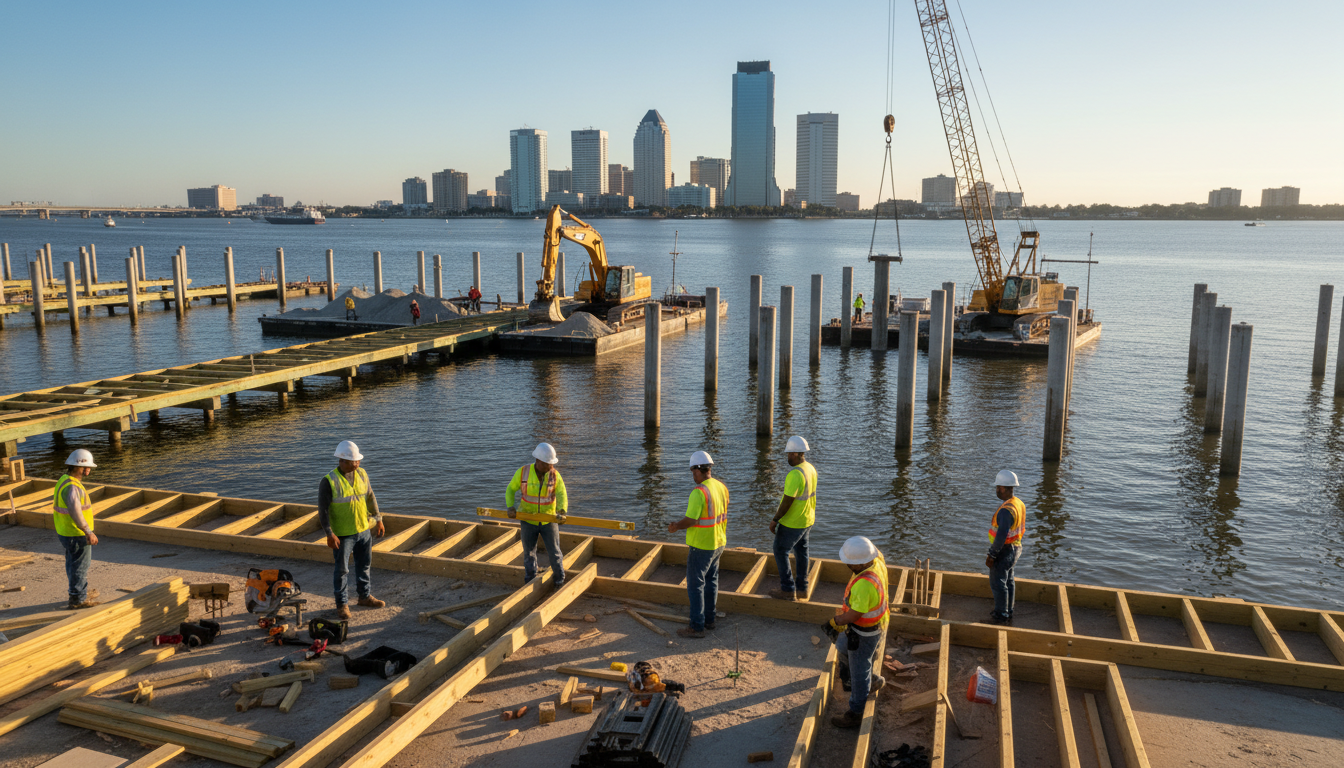
The foundation and piling installation phase typically takes 2 to 4 weeks. During this step, crews bring in pile drivers and barges to set supports that resist currents and boat impacts.
For fixed structures, driven pilings are hammered into the seabed. For floating docks, anchors and mooring systems hold the platform in place.
Depending on depth and soil conditions, your project may call for steel pilings, treated wood, or concrete footings. Each material affects lifespan and maintenance needs.
Proper installation matters for safety and long-term performance. A well-set foundation keeps your dock level and protects the structure and your boat during storms and daily use.
| Task | Typical Duration | Common Materials |
|---|---|---|
| Pile driving / anchors | 1–3 weeks | Steel, treated wood, anchor systems |
| Footings & concrete work | 1–2 weeks | Concrete, rebar |
| Site checks & adjustments | Ongoing during install | Survey gear, marine hardware |
Framing and Decking Construction
This phase shapes the skeleton and walking surface that you and your guests will use.
Joist and Beam Support
Framing work sets joists and beams across the pilings. This creates the core support for your structure.
Crews space joists to meet load requirements and local codes. Proper alignment prevents sag and eases future maintenance.
Installing Decking Boards
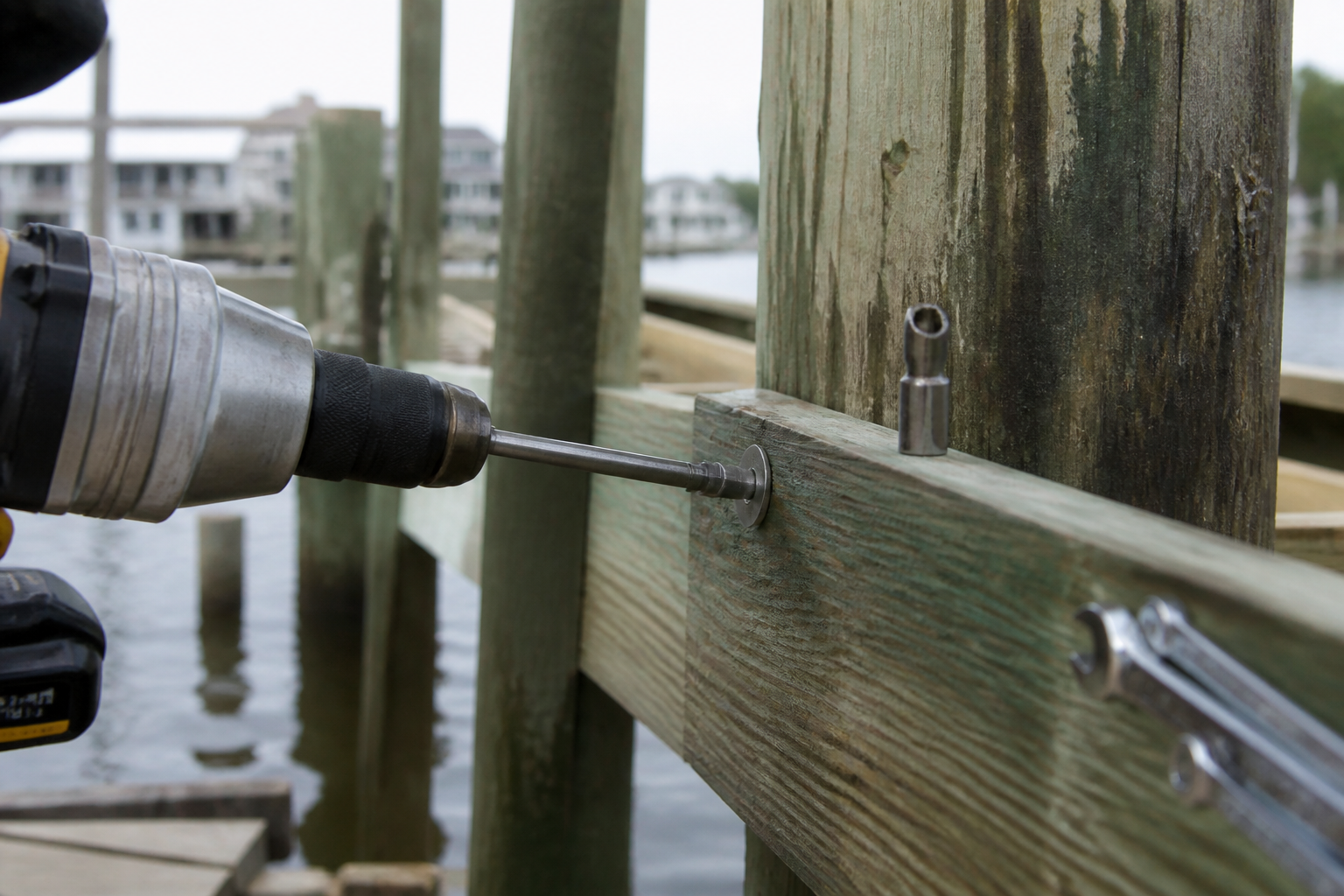
Decking installation usually uses corrosion-resistant fasteners. That choice keeps boards secure in salt or fresh water.
Material choice affects upkeep. Composite decking needs less care, while treated wood gives a classic look.
Safety Features
Non-slip surfaces, guardrails, and cleats are installed during this step. These meet safety requirements and protect your boat guests.
Adding accessories like boat lifts during framing saves time and integrates mounting points cleanly.
| Task | Typical Duration | Key Materials |
|---|---|---|
| Framing (joists & beams) | 1–3 weeks | Pressure-treated lumber, steel beams |
| Decking board installation | 1–2 weeks | Composite, wood, corrosion-resistant fasteners |
| Safety & accessories | 1 week | Non-slip coatings, railings, boat lift mounts |
- Typical total for framing and decking: 3–6 weeks.
- Quality framing reduces repair needs and extends the life of your dock.
Final Inspections and Finishing Touches
Before you step onto the new platform, inspectors confirm every detail meets code and design plans. Final inspections and finishing touches usually take 1 to 2 weeks and mark the last step before full use.
Inspectors check structural integrity and ensure electrical systems for any boat lifts or lighting meet safety standards. They verify that framing, decking, and all installation work match the approved permit application.
Compliance with local regulations and the permit is confirmed during this phase. A professional assessment will note any small fixes needed to meet standards for water access and load size.
- Final checks include structure, electrical safety, and environmental compliance.
- Finishing touches such as protective coatings and non-slip decking improve safety and maintenance.
- Once inspectors sign off, your dock is officially ready for your boat and waterfront activities.
Conclusion
Smart planning turns a complex waterfront build into a smooth, predictable outcome. Follow strong, practical steps at each phase and you will reduce surprises.
Keep permits, regulations, and site conditions in clear view while working with experienced contractors. Good framing and decking choices protect your investment and make dock construction easier for owners.
Routine maintenance and environmental compliance extend life span and lower long‑term costs. Whether you pick floating docks or a fixed pier, steady planning keeps your boat and waterfront project safe and usable for years.
FAQ
What affects the timeline for a waterfront project?
Site conditions, water depth, soil type, design complexity, permitting requirements, material availability, and contractor scheduling all shape your project timeline. Seasonal weather and tidal windows can also speed up or delay work.
How will water depth and soil conditions influence my plan?
Depth and substrate determine foundation choices like driven pilings or helical anchors. Shallow, sandy bottoms differ from deep, silty beds and change equipment needs, costs, and installation time.
Which environmental factors need assessment?
You must consider wetlands, seagrass, protected species, and storm surge zones. These influence permit type, mitigation measures, and allowable footprint near the shoreline.
What design decisions impact construction speed?
Simple walkways and floating docks install faster than multi-level structures with boat lifts. Material choice, dock size, and custom features like covered slips add time for fabrication and assembly.
What permits are generally required for waterfront work?
Typical approvals include local building permits, county or city shoreline permits, and state waterway permits. Your city zoning office and the Florida Department of Environmental Protection will guide required filings.
When is an Individual Environmental Resource Permit necessary?
If your project affects submerged lands, critical habitats, or exceeds thresholds for fill and structures, you’ll need an Individual ERP. That process is more detailed and extends the pre-construction phase.
How does material selection affect scheduling?
Wood often ships faster but requires maintenance. Composite and galvanized steel offer longevity but may need lead time for orders. Availability of boat lifts, hardware, and specialty fasteners also affects delivery dates.
What are the pros and cons of wood, composite, and steel?
Pressure-treated wood is affordable and easy to work with but needs upkeep. Composite resists rot and reduces maintenance but costs more. Steel provides strength for large spans and lifts but requires corrosion protection and heavier equipment.
What happens during piling and foundation installation?
Crews set pilings or anchors using barges or land rigs, driving or screwing them into the substrate. This establishes the dock’s structural grid and can be constrained by tide windows and environmental restrictions.
How long does framing and decking typically take?
Once foundations are set, framing and decking proceed faster—often days to a few weeks depending on size. Joists, beams, and decking boards go in, followed by safety rails, cleats, and electrical work if needed.
What are common safety features to include?
Non-slip decking, handrails, bumpers, proper lighting, and marine-grade hardware improve safety. You may also add life-ring stations or ladder access per local code and best practices.
What occurs during final inspections and finishing touches?
Inspectors check structural integrity, compliance with permit terms, and installed safety items. Final tasks include sealing, touch-up, attaching signage, and cleanup before you use the dock.
How should I plan maintenance after installation?
Schedule seasonal checks for fasteners, pilings, and deck boards. Clean surfaces, recoat or seal wood as recommended, and inspect boat lifts and electrical systems annually to protect your investment.
Who handles permitting and compliance for waterfront projects?
Licensed contractors, marine contractors, or coastal engineers often prepare permit applications and coordinate with agencies. Hiring local specialists familiar with Jacksonville-area rules streamlines approvals.
What factors determine overall cost and investment timeline?
Size, materials, foundation method, site access, permitting complexity, and added features like lifts or electrical service drive both cost and schedule. Accurate site assessment and quotes help you budget time and money.