Have you ever wondered if that sturdy shore barrier truly protects your waterfront home as long as it should?
A solid retaining wall keeps erosion at bay, but coastal forces wear down even the best-built defenses over time. Hansen Marine Construction offers free on-site assessments for property owners around Jacksonville to spot early damage and avoid costly collapse.
Spotting small cracks, leaning sections, or soil loss behind the structure can mean it’s time for action. Acting early often lets you choose targeted repairs instead of full replacement, saving money and stress.
In the next sections, you will learn clear indicators of seawall failure, how environmental factors shorten a wall’s lifespan, and practical steps to protect your investment.
Key Takeaways
- Coastal barriers have a limited lifespan and need regular checks.
- Early signs like cracking or soil loss help avoid full collapse.
- Hansen Marine Construction provides free local on-site assessments.
- Timely repairs can be far less costly than total replacement.
- Environmental stressors often determine how long walls last.
Identifying the Warning Signs Your Seawall Is Failing in Jacksonville and When to Repair or Replace
A few surface cracks or a tilt in a wall may mean the ground behind it is washing away. Start with a walk along the waterfront and look closely at concrete faces, top edges, and the land at the base.
Visual Indicators of Shifting
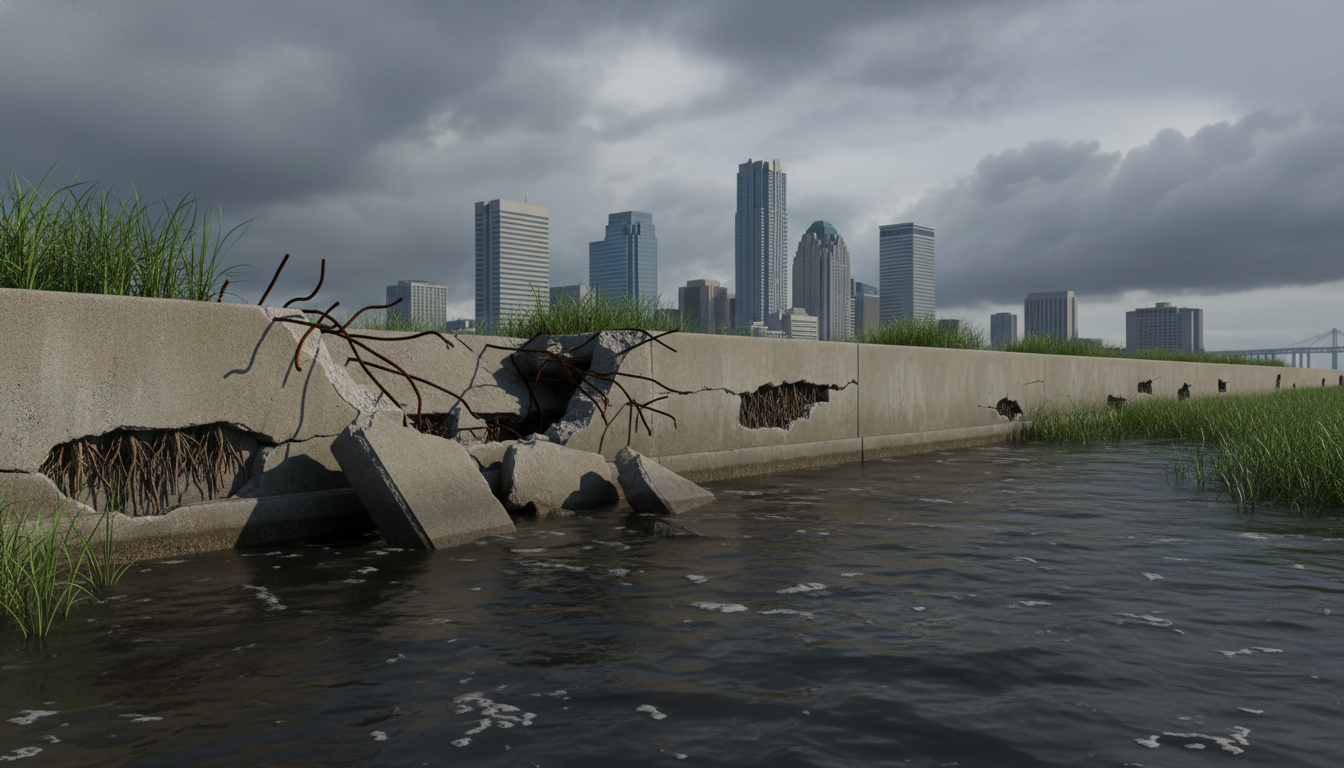
Visible cracks in concrete often mean the structure is moving under hydrostatic pressure from ocean water. Rust stains on the face point to corroding rebar, which weakens strength over time.
Soil Loss and Drainage Issues
Look for soil loss behind the wall, small sinkholes, or depressions on the lawn near the edge. When weep holes clog and water cannot escape, pressure builds and leaning sections may appear.
Signs of Material Deterioration
Spalling concrete, exposed reinforcement, or new surface stains often signal progressive damage. Dalinghaus Construction and others use polyurethane injection to stabilize soil behind a failing structure, helping prevent further loss.
- Tip: Monitor changes over time — small shifts often signal larger problems ahead.
Why Coastal Environmental Factors Cause Structural Damage
Water that collects behind a barrier turns into a hidden force. Hydrostatic pressure builds when groundwater and trapped tides push outward. That pressure can make concrete crack and joints open.
The Impact of Hydrostatic Pressure
The ocean’s constant motion erodes soil behind the wall. Over time, loss of soil lowers support and raises pressure on the base.
Poor drainage lets water travel through joints and fill voids. Saturated ground increases lateral pressure and speeds material damage.
- Cycle of erosion: waves remove soil, exposing foundations.
- Salt and age: concrete and reinforcement corrode faster in a marine environment.
- Mitigation: techniques like polyurethane injection stabilize soil behind the wall and reduce water buildup.
| Environmental Factor | Effect on Structure | Typical Remedy |
|---|---|---|
| Hydrostatic pressure | Cracks and bulging panels | Improve drainage, relieve pressure |
| Soil loss / erosion | Loss of foundation support | Fill voids, inject polyurethane |
| Saltwater exposure | Corrosion of rebar, concrete spalling | Surface repairs, protective coatings |
| Poor site drainage | Increased lateral pressure | Install drains, maintain weep holes |
Evaluating the Best Path Forward for Your Property
A careful assessment of drainage, material condition, and support behind the wall guides the best path forward.
Start with a professional inspection. A qualified report will show whether a targeted seawall repair will hold or if subsurface soil loss has progressed too far. Harbor Bay Marine Industries notes concrete barriers often reach the end of useful life after about 30–35 years.
When Professional Repairs Are Sufficient
Minor cracks, clogged drains, or small erosion pockets often respond well to repair. Contractors may reinstall drainage, patch concrete, or use polyurethane injection to stabilize soil behind the wall.
Deciding on a Full Structural Replacement
Deep cracks, severe leaning, rust stains, or failing tie-backs usually mean the system lost core support. In those cases, replacement protects waterfront property value and reduces long-term risk from hydrostatic pressure and ongoing erosion.
- Tip: An inspection is the only way property owners can know if repairs are temporary or a rebuild is wiser.
Conclusion
Routine checks and prompt service make the difference between simple fixes and costly rebuilds. Call now, for a free seawall evaluation and get a clear plan that fits your waterfront property.
Schedule a professional inspection every few years. Early detection of water entry, soil loss, or surface damage can limit repairs and extend life by many years.
Proper drainage and modern fixes like polyurethane injection can slow erosion and protect walls. Whether the issue needs minor repair or a full seawall repair, acting in time saves property owners thousands and brings peace of mind.
Concerned? Call Dalinghaus Construction at (877) 360-9277 for a free seawall inspection today.
FAQ
What visual indicators show a seawall is shifting or leaning?
Watch for bowing panels, cracks running vertically or horizontally, gaps between wall sections, or slabs tilting toward the water. You may see new gaps at joints, staircases pulling away from the wall, or leaning bulkheads. These are clear signs that pressure behind the structure or foundation movement is compromising stability and you should arrange an inspection.
How can I tell if soil loss behind the wall is a problem?
Look for exposed roots, sunk or slumped ground, and areas where turf or fill has washed away after storms. Soft spots or sudden drops in the land directly behind the wall often mean you’re losing backfill, which reduces support. Also check for ponding water or poor drainage near the top of the wall—both speed soil loss and raise hydrostatic pressure.
What material deterioration should prompt action?
Rust stains on metal tiebacks or anchors, crumbling concrete, spalling, and exposed rebar are red flags. Vinyl or timber walls can show rot, warping, or deep scratches from debris. Any visible reinforcement corrosion or major surface failure usually means reduced load capacity and calls for repair or replacement planning.
How does hydrostatic pressure affect coastal structures?
Groundwater buildup behind a wall pushes outward and can cause bulging, cracking, or sudden collapse if not relieved. Poor drainage, clogged weep holes, and heavier-than-designed water tables from rain or tides increase that pressure. Managing drainage with weep holes, proper backfill, and drain systems helps reduce this force.
When are professional repairs a good option?
Minor cracks, small settlements, localized corrosion, or limited soil loss can often be fixed with targeted repairs—grouting, tieback reinforcement, patching concrete, or adding localized armor. A licensed marine contractor or structural engineer can assess whether repairs restore safety and extend life at a lower cost than replacement.
How do I decide if a full structural replacement is needed?
Consider replacement if damage is widespread: extensive bowing, multiple failed panels, large-scale soil washout, or long-term corrosion of anchors. Repeated repairs, ongoing drainage failures, or an older wall near the end of its design life also favor replacement. An engineer’s report will weigh repair cost versus long-term performance and risk.
How often should I get an inspection for waterfront protection?
Schedule a professional inspection every 2–5 years and after major storms or high-water events. You should also do a quick visual check seasonally. Regular inspections spot problems early—reducing repair costs and lowering risk to land, landscaping, and property.
Can small repairs prevent total collapse?
Yes. Timely fixes like restoring drainage, sealing cracks, repairing anchors, and adding toe protection can stop progressive failure. Address issues early to keep hydrostatic loads and erosion under control. Ignoring small problems increases the chance you’ll need a full rebuild later.
Will insurance cover seawall damage from storms or erosion?
Coverage varies by policy and cause. Some homeowner or flood policies exclude gradual erosion but may cover sudden storm damage. Document condition with photos and get contractor or engineer reports to support claims. Check with your insurer to understand limits and exclusions for coastal structures.
What temporary measures help after storm damage?
Install sandbags, temporary armor like riprap, or short-term timber bracing to limit further washout. Clear debris from weep holes and shore up backfill where safe. These steps aren’t permanent fixes, but they reduce immediate risk until professionals can evaluate and repair.
Are polyurethane injections effective for wall repair?
Polyurethane grout can seal leaks, stabilize voids, and reduce water flow behind concrete panels. It’s a useful repair tool for certain cracks and undermining issues, but it won’t fix severe structural failure. Use it as part of a repair strategy recommended by an engineer or contractor.
How do I choose a qualified contractor or engineer?
Hire firms with marine or coastal experience and references for similar work. Verify licenses, insurance, and memberships in professional groups like the American Society of Civil Engineers. Ask for case studies, inspection reports, and warranties. A good contractor will provide a written scope, timeline, and cost estimate.
What long-term maintenance helps extend wall life?
Keep drainage clear, repair small cracks promptly, maintain vegetation that stabilizes soil without deep roots near the wall, and add toe protection where erosion is active. Monitor after storms and document changes. Proactive upkeep delays costly interventions and protects waterfront land.