Key Takeaways
- Prioritize a site review before any custom dock construction begins, because depth, bottom conditions, tides, and shoreline movement in Jacksonville can change the entire dock design.
- Match the dock type to the water, not the sales pitch. Floating dock construction can fit some St. Johns River, ICW, and creek shorelines better than a fixed build, especially where water levels and wake exposure shift fast.
- Coordinate boat lift placement, access points, and boarding space during the design phase, so the finished dock actually works for the boat, the owner, and the contractor who installs it.
- Choose marine-grade materials and fastening systems that hold up to saltwater, storms, and daily use, because weak framing or cheap decking turns into repair work much sooner than most homeowners expect.
- Confirm permitting and inspection planning early with a Jacksonville dock builder, since local rules, waterfront setbacks, and neighbor-facing issues can slow a project if they’re ignored.
- Plan for long-term durability from day one. A good dock builder thinks about storm damage, broken components, and maintenance access before the first pile is driven.
In Jacksonville’s waterfront neighborhoods, one bad dock decision can cost a homeowner months of use and a stack of repairs. That’s why custom dock construction keeps winning out over cookie-cutter kits — the water doesn’t care what a catalog promised. It cares about tides, wake, depth, and the way a boat actually loads at the lift.
Along the St. Johns River and the ICW, a dock has to do more than sit there. It has to handle changing water levels, protect access, and fit the way a family boards, ties off, and stores gear (without turning every weekend launch into a chore). And if the shoreline shifts, the bottom softens, or the lift ends up in the wrong spot, the whole setup starts working against the owner. That’s the real issue. A good dock builder plans for the water first, then the structure.
Jacksonville buyers are asking harder questions now because storm seasons, insurance pressure, and long-term upkeep aren’t getting easier. Who wants a fixed build that looks fine on day one and starts failing after the first rough stretch? Not the homeowner paying for it.
Why Jacksonville waterfront owners choose custom dock construction over standard dock kits
Roughly 7 out of 10 shoreline problems show up after the dock is already in the water. That’s why custom dock construction keeps beating kit builds in Jacksonville’s riverfront neighborhoods — the site gets shaped around tides, access, and the boat, not the other way around.
Dock design choices shaped by the St. Johns River, ICW, and local creeks
On the St. Johns River, a fixed pier might look fine on paper and fail at the underwater edge once wake, wind, and soft bottom conditions start working on it. custom dock builders jacksonville who know the river, the ICW, and small canal cuts usually plan for clearance, pilings, and future lift placement from day one.
That’s the difference between a dock that just gets built and one that keeps working for a house, a yacht, or even a houseboat moored near the waters edge. Standard kits don’t account for every shoreline. They can’t.
Why floating dock construction fits some shorelines better than fixed builds
Floating platforms make sense where water levels move fast or the shore drops off abruptly. A builder may choose floating dock sections for a pontoon, a broken shoreline, or a property near a jetty or pier line that needs easier boarding.
custom residential dock construction — custom waterfront dock construction also give owners better material control — timber, aluminum, composite, or mixed framing — instead of a one-size box.
How dock builders plan around boats, lifts, tides, and access
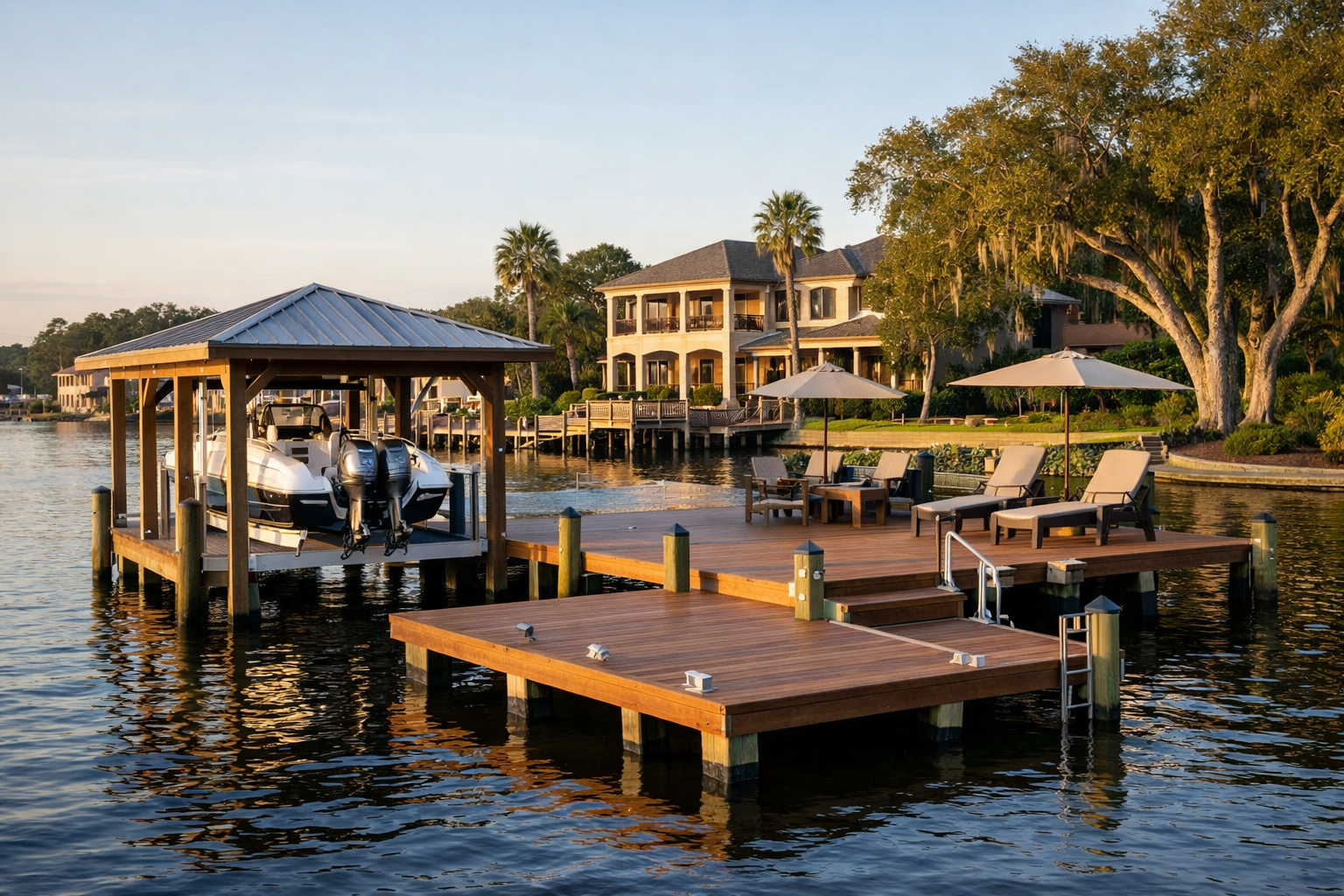
custom dock design and build jacksonville projects work best when the crew maps swing radius, lift height, and walking access before the first post goes in. A custom dock installation Jacksonville team will also check permit lines, tide timing, and launch space for workers and materials.
And that’s where most mistakes happen.
For buyers comparing Ponte Vedra custom dock builder options, the practical test is simple: can the layout serve the boat today and still fit a different lift, lift repair, or future addition later? That’s where Coastal Marine Group Jacksonville fits the conversation — custom boat dock construction that’s planned for real waterfront use, not showroom photos.
Step 1: Site review, dock design, and permit planning for a Jacksonville dock builder
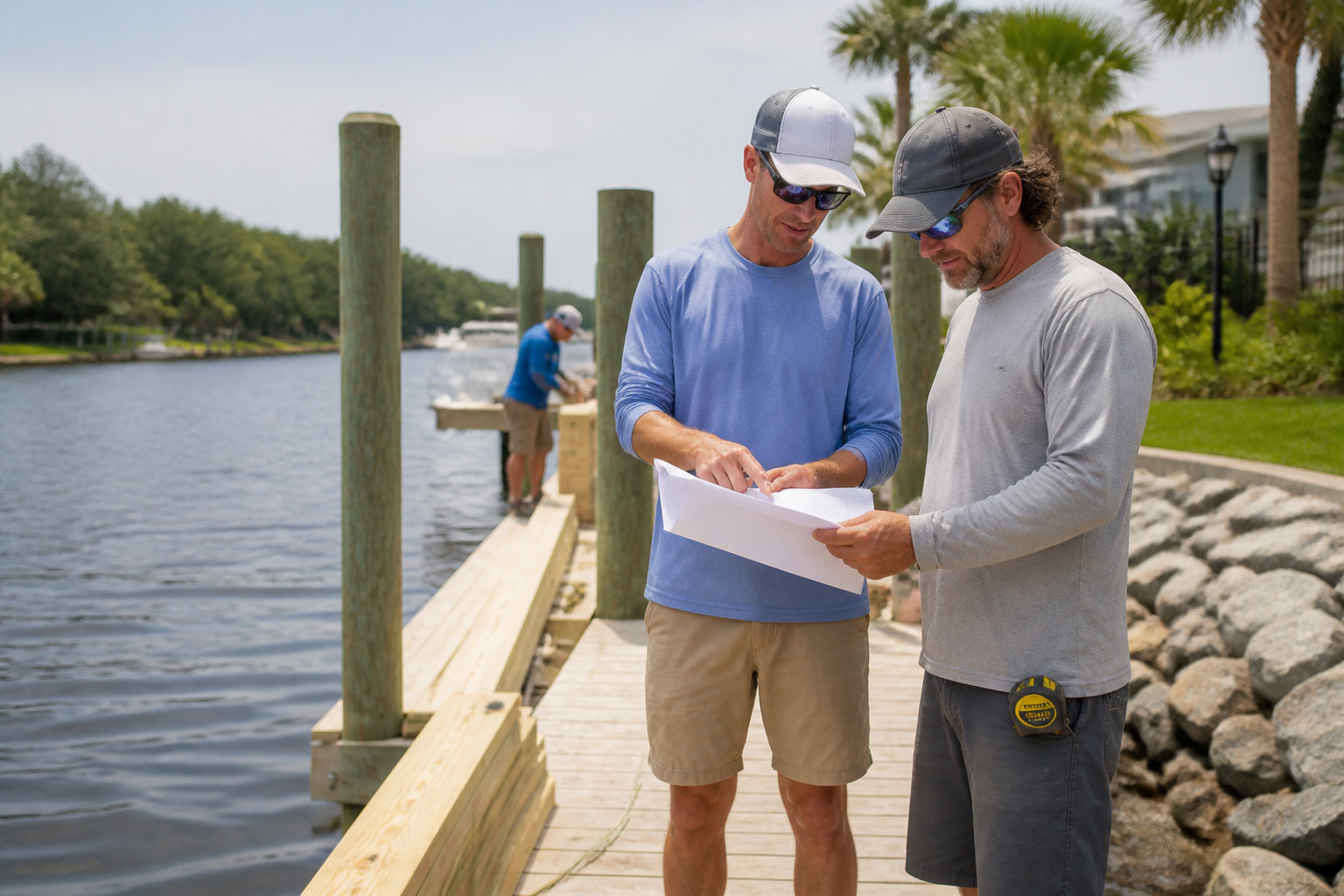
What does a dock need before a single post goes in the water? A real site review. For custom dock construction Jacksonville FL, the first pass should measure depth, bottom conditions, tide swing, and shoreline shift, because a dock that looks fine on paper can turn broken after one hard season.
In practice, a builder walks the edge, checks access, and maps where a floating section, pier, or jetty makes sense for the house, the boat, and the shore. That’s the difference between a dock builder and a contractor who just begins building. It matters near the St. Johns River, the ICW, and canal-front lots where underwater changes can move fast.
Measuring depth, bottom conditions, and shoreline changes before building starts
Good custom dock design — build Jacksonville work starts with the ground truth: sand, muck, shell, or hard bottom. If the site serves a houseboat, pontoon, or yacht, the design has to match the actual waterline—not the guess.
That’s why personalized dock construction Jacksonville should include clear notes on tide range, wake exposure, and the risk of erosion near the water’s edge.
Matching dock materials to saltwater exposure, storms, and long service life
For custom residential dock construction and custom waterfront dock construction, material choice is the long-term filter. A cape lot, a beach property, or a river house won’t all need the same framing, fasteners, or decking. Salt exposure, storm surge, and worker access all shape the build.
Simple idea. Harder to get right than it sounds.
That planning also supports custom dock project Jacksonville schedules, because custom boat dock construction, made-to-order dock construction Jacksonville, and bespoke dock construction waterfront homes all need the right materials on site before work starts.
Coordinating with local permitting needs in Jacksonville and nearby waterfront towns
Permit planning can’t be an afterthought. A licensed custom dock builder in Jacksonville should line up drawings, setbacks, and local approvals early, especially for Jacksonville beach custom dock construction, Ponte Vedra custom dock builder projects, and Intracoastal Waterway custom dock construction. Coastal Marine Group Jacksonville is one example of an insured custom dock construction company that works this way.
Searchers asking for a custom dock contractor near me or custom dock installation in Jacksonville usually need the same thing: a clear plan, a clean permit path, and less risk of delay.
Step 2: Fabrication and construction details that protect boats, lifts, and waterfront access
Write this section as if explaining it to a smart friend over coffee — casual but accurate and specific. In custom dock builders in Jacksonville, the work starts with placement, not lumber. If the boat lift sits 18 inches off, the whole flow feels wrong. Boarding gets awkward. Fender rub starts early.
Building for boat lift placement, walkways, and safe boarding points
Good custom dock construction, Jacksonville, FL, keeps the lift, walkway, and cleat lines in one clean setup. A custom residential dock construction plan should leave room for a gator-tough boarding edge, a floating section if the shore drops fast, and enough width for two adults to pass without shoulder-checking rails. For a st. Johns River custom dock construction job, where spacing matters even more because the tide doesn’t forgive sloppy layout.
Using pilings, frames, decking, and fasteners that stand up to marine use
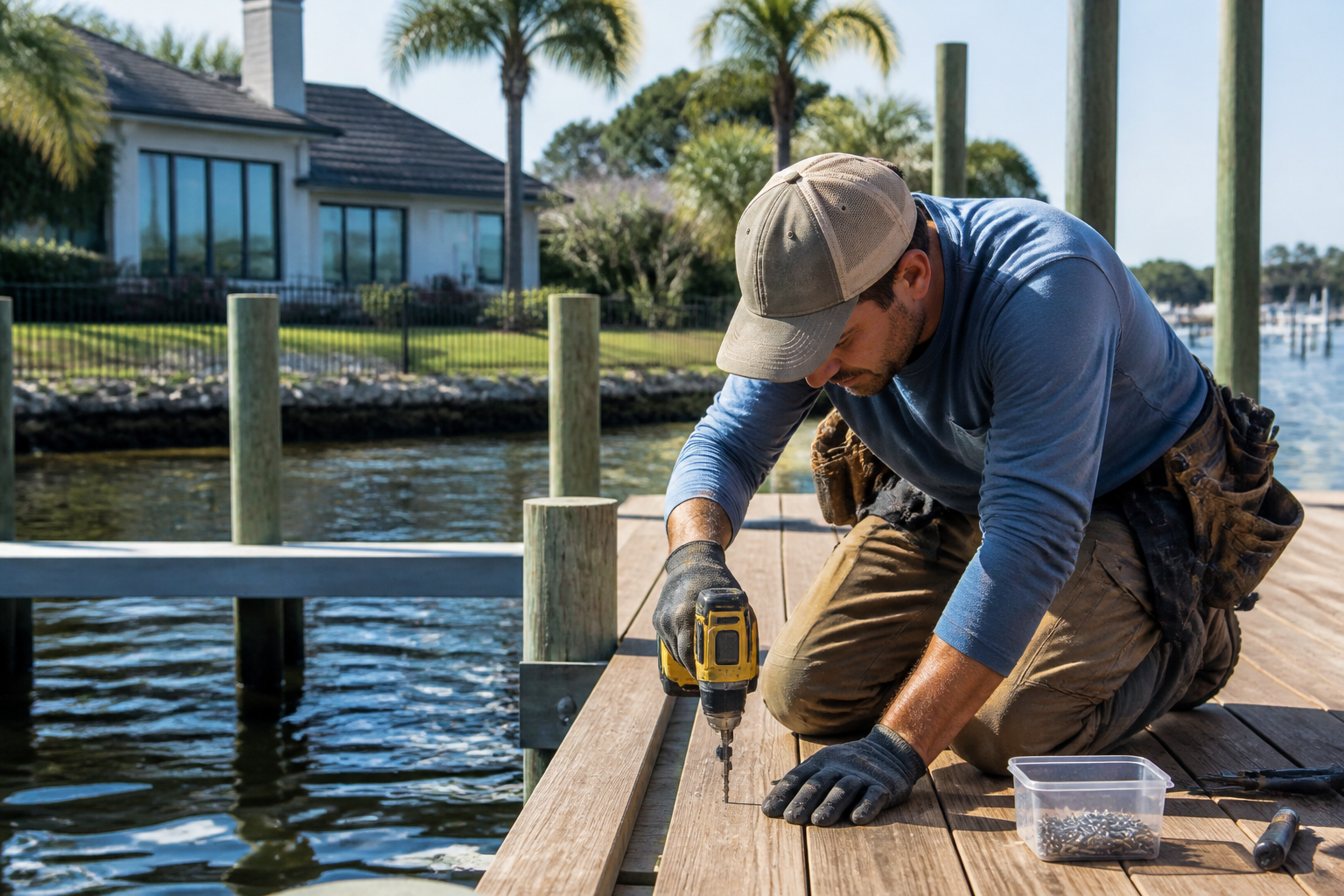
For custom waterfront dock construction, the frame has to resist rot, salt, and constant wet-dry cycling. That means pilings set deep, corrosion-resistant fasteners, and decking chosen for real boat traffic, not house use. The same rule holds for custom boat dock construction, custom dock design and build Jacksonville, and Jacksonville Beach custom dock construction—material choices need to match the water, the wake, and the worker traffic.
Planning around piers, jetties, pontoons, and other waterfront structures
A bespoke dock construction waterfront homes plan also has to respect nearby piers, jetties, pontoons, and houseboat access. personalized dock construction jacksonville and made-to-order dock construction jacksonville work best here, because one canal lot isn’t like the next. A custom dock project Jacksonville should also fold in custom dock planning and permitting, plus a licensed custom dock builder Jacksonville who knows the ICW rules, and an insured custom dock construction company that can keep the job moving. Coastal Marine Group Jacksonville is one local example.
For owners searching for a custom dock contractor near me or custom dock installation Jacksonville, the real test is simple: does the dock still feel solid after storm chop, a pontoon bump, and ten years on the water?
The short version: it matters a lot.
Step 3: Installation, inspection, and long-term durability after the dock is built
A dock can look finished — still fail fast if the install missed tide swing, depth, or wake exposure. In Jacksonville, that’s where custom dock construction earns its keep. The work doesn’t end at the waters edge.
For a waterfront house on the St. Johns River, custom residential dock construction has to account for floating sections, underwater clearance, and the way a boat sits after a storm. The same is true for intracoastal waterway custom dock construction, where wake from a yacht, pontoon, or houseboat can shake a weak foundation loose in a season. A good builder checks alignment before the first tide cycle, then checks it again after load testing.
Durability starts with repair planning. A broken board, corroded fastener, or damaged jetty brace doesn’t wait politely. Smart homeowners ask for a spare-parts list, a storm check schedule, and a clear plan for worn materials before the dock is handed over.
That’s why made-to-order dock construction in Jacksonville should include inspection notes tied to the exact site. A licensed custom dock builder Jacksonville can flag the pieces most likely to fail near a canal, pier, or port edge, then set a repair path for the next 12 to 24 months. Realistically, that beats waiting for the first broken pile cap.
Sounds minor. It isn’t.
- Check bolts, decking, and lift points after the first heavy tide.
- Document storm damage fast, before small issues turn into bigger ones.
- Schedule maintenance before peak wake season.
That final inspection is the difference between a dock that just gets built and one that keeps working.
Choosing a dock construction company that understands Jacksonville waterfront conditions
Local conditions decide whether custom dock construction holds up for 5 years or 25. A contractor working on the St. Johns River, the ICW, — Jacksonville Beach has to read tide swing, shallow water, and storm exposure before a pile is set.
- Ask how they handle custom dock planning and permitting for creeks, canals, and waterfront homes.
- Ask for recent custom dock project Jacksonville examples, not a photo from Orlando, Alabama, or Cape Coral.
- Ask how they coordinate boat lift access, floating sections, and materials for a pier, jetty, or pontoon setup.
Questions to ask dock builders about experience, timelines, and communication
Real answers sound specific. A good team can explain whether a houseboat slip, yacht access lane, or broken shore repair needs deeper pilings, a wider deck, or underwater work before building starts.
Questions that should get direct answers: Who handles permits? Who talks to the worker onsite? How long from the beginning to the final inspection? If the timeline shifts by a week, who calls first?
The best custom dock builders Jacksonville homeowners choose usually give plain updates, not vague promises. They also handle custom waterfront dock construction, Jacksonville beach custom dock construction, and custom dock contractor near me searches with the same local process.
Why local waterway knowledge matters more than a one-size-fits-all building approach
An insured custom dock construction company should know how tidal movement changes framing, anchoring, and access at the water’s edge. That’s where custom waterfront dock construction stops being a slogan and starts protecting the house, the dock builder’s schedule, and the owner’s budget.
That gap matters more than most realize.
For Jacksonville homeowners, that usually means custom residential dock construction, custom boat dock construction, custom dock design and build Jacksonville, St.John’s River custom dock construction, Intracoastal Waterway custom dock construction, Ponte Vedra custom dock builder, personalized dock construction Jacksonville, bespoke dock construction waterfront homes, made-to-order dock construction Jacksonville, custom dock installation Jacksonville, and licensed custom dock builder Jacksonville work tailored to the site, not copied from another port or lighthouse property.
Frequently Asked Questions
How much does it cost to build your own dock?
DIY custom dock construction can look cheaper on paper, but the bill gets messy fast once you add pilings, permits, hardware, flotation, and labor you have to hire out anyway. A small fixed dock might start around $8,000 to $15,000 in materials alone, while a larger waterfront build can run far higher once site work is factored in.
How much does a 100-foot dock cost?
A 100-foot dock can land anywhere from roughly $40,000 to well over $150,000, depending on water depth, dock type, materials, — whether the project includes a lift, electrical, or covered sections. A floating dock and a pile-supported pier don’t price the same way, and no honest builder should pretend they do.
Can you build a dock without a permit?
Usually, no. Most shoreline projects need permits from local, state, or federal agencies, especially if the dock affects wetlands, navigation, or underwater habitat. If a contractor tells someone to skip the permit process, that’s a red flag.
Can you build a dock yourself?
Technically, yes. Practically, most property owners shouldn’t unless they’ve built marine structures before and understand load paths, tide exposure, anchoring, and local code. One bad measurement near the water’s edge can turn into a broken structure, a failed inspection, or a repair job that costs more than hiring a dock builder in the first place.
What affects the price of custom dock construction the most?
The biggest drivers are water depth, soil conditions, dock length, material choice, and whether the site needs a floating dock, pier, jetty, or boat lift tie-in. Access matters too. If a crew has to work around a tight canal, rough shore, or heavy tidal swing, the project takes more planning and more worker time.
Most people skip this part. They shouldn’t.
Which materials last longest for waterfront construction?
For many waterfront homes, marine-grade aluminum, composite decking, pressure-treated timber, and properly rated fasteners hold up better than cheap alternatives. The right choice depends on the house, the waters, and how much sun, spray, and current the structure sees. Cheap materials age fast near saltwater.
Do floating docks work better than fixed docks?
Sometimes. Floating docks work well where water levels move a lot, while fixed docks make more sense in deeper or more stable water. The better choice depends on the site, the boat, — how the owner uses the dock day to day, not on what looks easiest to build.
Can a dock be designed for a boat lift, pontoon, or houseboat?
Yes, and that should be planned from day one. A boat lift, pontoon tie-up, or houseboat access changes the layout, load demands, and clearance needs. If the dock is built first and the lift comes later, the owner often ends up paying twice.
How long does custom dock construction usually take?
A straightforward project can take a few weeks once permits are in hand. Bigger builds, storm repairs, or sites with tricky underwater conditions can run longer. The real delay is usually paperwork or weather, not the crew itself.
What should a waterfront owner ask before hiring a dock builder?
Ask how the builder handles permits, site access, tide conditions, and long-term maintenance. Ask what happens if the structure settles, shifts, or takes storm damage. And ask for a clear plan for the dock, the boat, and the shoreline together, because those pieces don’t work well when they’re treated like separate jobs.
Jacksonville waterfront owners don’t need a dock that only looks right on paper. They need one that fits the shoreline, handles tide swings, leaves room for boat lifts and safe boarding, and holds up after a hard season. That’s the real case for custom dock construction: it’s built around how the property actually works, not how a kit brochure says it should.
Site review comes first. Then the build details. Then the long view — inspection, wear, storm planning, and repairs before small issues turn into expensive ones. Shortcuts show up fast on the water. Rust, misalignment, loose fasteners, and poor access. All of it costs more later.
For homeowners on the St.
John’s River, the ICW, and nearby creeks, the next step is simple: confirm the dock builder knows local tides, permitting, and lift placement before any work starts. Ask for a walk-through of the site and a plan that fits the boat, the shoreline, and how the property is used every day.
Coastal Marine Group
9633 Old St Augustine Rd Unit A
Jacksonville, FL 32257
(904) 736-4568
https://dockbuilderjacksonville.com/
Visit Our Google Profile